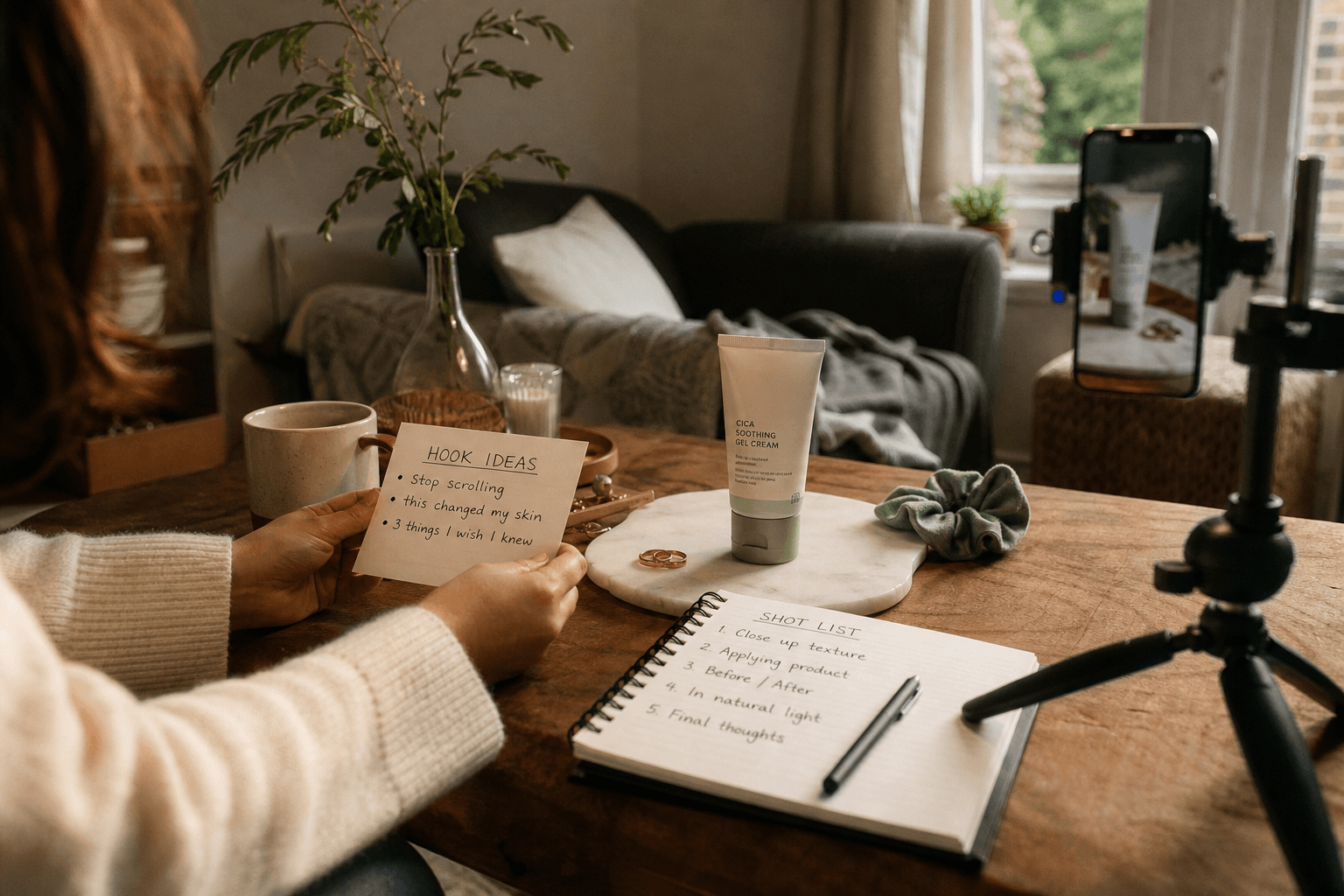
Two vendors send you a quote for “one ready-to-post UGC video.” One is half the price of the other. The cheaper one looks sensible until someone asks three necessary questions: Who’s writing the hook? Can we use it in paid social? What exactly do we get back?
That is the real buying decision behind ready-to-post UGC cost. There is no trustworthy universal average that settles it. What you can compare is scope. And if you don’t, the lower quote often turns into extra editing, extra approvals, and unresolved usage terms.
My recommendation is simple: compare quotes by four things before you compare rates. Look at creator work, edit depth, usage scope, and delivery terms. If those are vague, the per-video number is not very informative.
“Ready to post” means ready for a specific job
A vertical video can be filmed, edited, and still not be ready for the way you plan to use it.
That is partly a platform issue. TikTok’s policies say creators posting content that promotes a brand, product, or service must turn on the commercial content disclosure setting, and TikTok’s ad documentation sets out format and functionality requirements for ads and placements (TikTok One policies, TikTok ad format and functionality). Instagram defines branded content around an exchange of value, including payment or gifts, and says the paid partnership label should be used in those cases (Instagram branded content rules). The FTC’s endorsement guidance adds the broader rule underneath all of this: material connections between advertisers and endorsers should be clearly disclosed (FTC endorsement guidance).
None of those sources tells you what a vendor should charge. They do explain why “ready to post” is not just filming plus captions.
So make the first decision plainly. Do you need:
- a final vertical video your brand account can publish organically, or
- an asset you may also adapt or run in paid placements on TikTok, Instagram Reels, or Facebook Reels?
Those are different deliverables. A quote that fits the first job may be poor value for the second.
Read the video transcript
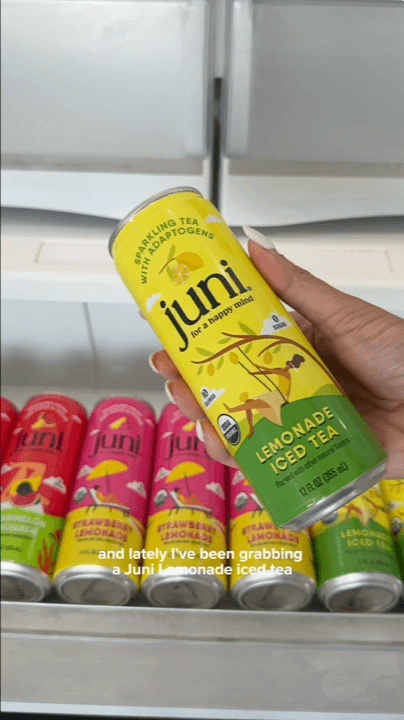
You need a video that’s actually usable, not a low number that later grows into extra edits, approvals, and tense back-and-forth about what was included. A vertical clip can be filmed and edited yet still miss the real job, because organic posting, paid use, and creator-posted content ask for different preparation. Price only becomes meaningful when quotes spell out creator work, edit depth, usage, and delivery terms, since each one decides where effort and risk actually land. Imagine a magnesium drink brand needing Reels now and possible paid use next week; the stronger quote includes a hook, two openings, captions, and a cutdown. Ask every provider to price the same scope: placements, who writes hooks, deliverables, revisions, usage, and exact files, because clarity prevents surprise costs later. Sometimes a lighter package is smart if your team can script or edit internally, but don’t assume flexibility you didn’t buy. Matching scope makes price finally useful.
The quote usually changes for four sensible reasons
Creator work: filming is not the whole assignment
Start with what the creator is actually responsible for.
Some quotes assume you will provide a script, talking points, shot list, and product angles. Others include concepting, hook ideas, on-camera delivery, product setup, and enough judgment to show the product honestly without adding unsupported product claims.
That difference matters more than a broad feeling that someone seems “on brand.” If the content needs a routine demonstration, an ingredient explanation, or a quick objection-handling script, ask whether the creator has shown that specific skill before. Zagged’s portfolio labels examples such as Macra as an ingredient explainer, Noble Origins as routine integration, and Unvault as a creator explainer. That is useful because it helps you inspect format fit without inferring performance from presentation alone.
If your team needs help judging creator fit before you even ask for quotes, this guide on how to find UGC creators who actually fit your brand is the better place to start. It will save you from buying “content” when what you actually needed was explanation.
Edit depth: one edited video can hide a lot
A quote that says “one edited video” is not specific enough.
You need to know whether that means a basic cut with captions or a fuller edit with pacing work, b-roll layering, audio choices, styled subtitles, alternate openings, cutdowns, and framing choices that suit the intended placement. Meta’s Reels guidance is useful here because it distinguishes Reels-ready creative from generic assets and recommends 9:16 video with audio and safe-zone-aware prep for Reels ads (Meta Reels ads guidance). That does not prove a provider using those conventions will outperform another one. It does support treating ad-ready preparation as real work rather than a free afterthought.
This is also where many teams quietly smuggle testing requirements into a production quote. If you expect to try three hooks, say so. If you want a 30-second main cut and a 15-second version for paid social, say that too. A hook test should answer a specific question about the opening, not just launch several unrelated edits and try to explain the difference afterward. Our guide to TikTok hook testing is useful because it explains how to interpret an opening test before writing the next brief. That only works if the quote included the variation you intended to test.
Usage scope: where the video can run changes the quote
Usage is where a lot of false price comparisons fall apart.
Organic use on your brand channels, paid social usage, and creator-posted branded content are not interchangeable. The workflow changes when a creator posts in exchange for value, because disclosure rules apply on Instagram and TikTok, and the legal context matters even when platform tools are available (Instagram branded content rules, FTC endorsement guidance).
The practical question is not “Do we need rights?” Of course you need rights. The practical question is which use the quote covers. Organic only? Paid and organic? Creator-posted content? Multiple platforms? A quote that includes paid and organic social usage is not directly comparable with one that stays silent.
For a concrete example, Zagged’s public human UGC offer says it includes a concept and hook, a real creator, editing and captions, a final video file, and paid/organic social usage. Its live UGC pricing page listed 25–200 fully edited videos at USD $99 each, with a minimum order of $2,475, at the time of writing in September 2026. That is Zagged’s offer, not an industry average and not proof of performance. The relevant lesson is that a quote becomes easier to judge when the scope is named.
If you are comparing providers, also confirm in writing what is not stated publicly. Do not assume turnaround, revision counts, raw footage access, exclusivity, creator posting, or ad-account permissions.
Delivery terms: what lands in your drive matters
Delivery is the part buyers often notice last and need first.
Ask what files you will receive, in what aspect ratios, with what caption treatment, and whether you are getting one final export or several versions. Ask whether raw footage or source clips are included. Ask how many revision rounds are included and what counts as a revision versus a changed brief.
That is not admin for its own sake. It tells you where the remaining work sits. A lower quote may be entirely reasonable if your team already has an editor, can make cutdowns quickly, and only needs creator-shot footage plus a base edit. If not, the bargain is often just moving cost from vendor line items into your team’s week.
Worked example: the cheaper quote creates more work
Say you sell a magnesium drink mix and need content for Instagram Reels now, with the option to run the best version as paid social next week.
You receive Quote A:
- one creator
- one 30-second edited video
- one revision round
- final MP4 delivery
You receive Quote B:
- one creator
- one approved concept and hook
- one main edit plus two alternate openings
- captions
- one 15-second cutdown
- paid and organic social usage
- two defined revision rounds
Quote A looks better until you write the brief you actually need.
A workable brief note might say:
“Show the product as part of a believable evening routine. Avoid medical claims. Mention taste, ease of use, and when someone would reach for it. We want one version for organic Reels and two opening angles to compare: ‘my wind-down routine’ versus ‘bedtime prep got simpler.’ Use captions to make the opening understandable without sound, and show the mixing step clearly.”
Now make the decisions in order.
First, who develops the hook? If your team can write the exact opener and the creator only needs to perform it, Quote A may still be enough. If you need the provider to shape the concept and opening, Quote B includes more of the work you actually need.
Second, what are you going to inspect after posting? If you plan to watch whether viewers stay through the first few seconds, compare comments for confusion about use, and decide whether to move the stronger opening into paid, then the alternate hooks in Quote B are not decorative. They are the point. Without them, your “test” becomes a new editing request after the first round goes live.
Third, what happens if one line needs to change after review? Imagine the original script says, “This knocks me out in 20 minutes.” That claim needs evidence and review before it can be used. A revision note that keeps the product truth intact might read:
“Replace ‘knocks me out in 20 minutes’ with ‘I make this when I’m winding down and want a simple evening routine.’ Keep the pour shot and tighten the pause before the product name card.”
If the quote defines revisions clearly, this is normal production. If it does not, this is where an initially lower quote can lead to additional work and disagreement.
In this scenario, the higher quote is often the cheaper decision overall because it already accounts for the likely path from organic post to paid test.
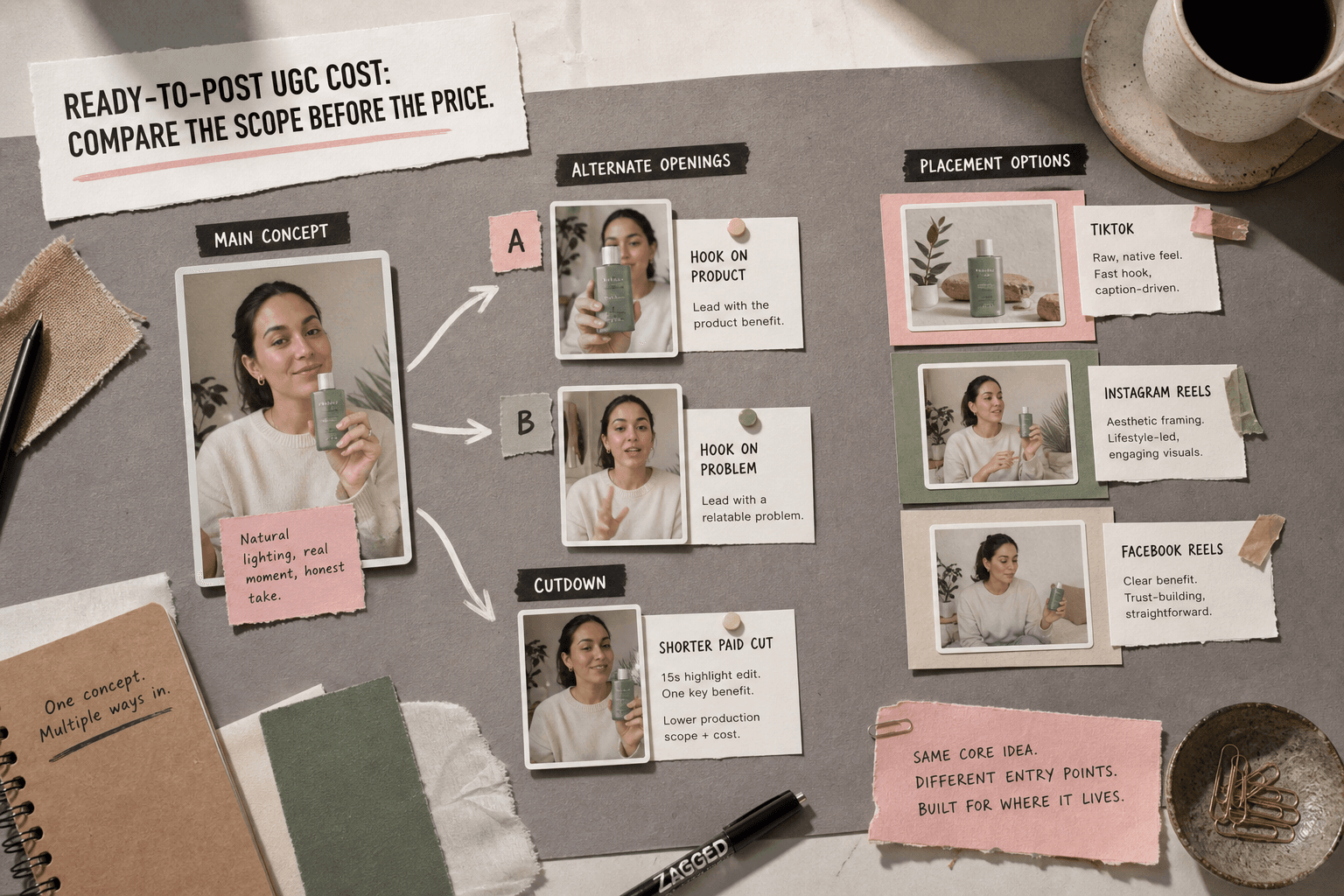
Worked example: a simpler scope can be the right buy
Now imagine you sell pantry snacks on Instagram and Facebook. Your in-house social lead can edit quickly, add captions, and make cutdowns. You do not need creator posting. You are not buying paid usage yet. What you need is believable product handling footage and one honest voiceover to work from.
In that case, a lighter brief is not underbuying. It is disciplined buying.
Your quote request might say:
“We need creator-shot vertical footage of unboxing, first taste, and two everyday use moments in a kitchen setting. Please quote filming plus one simple edited version with captions. Quote raw footage separately if available. Organic use on brand-owned channels only for now. Buyer will provide the talking points and required product claims language.”
That request gives a provider something concrete to price, and it keeps the internal workload where your team can handle it. If the content performs well organically and you later want paid variations, you will know you are commissioning new edit scope rather than discovering, too late, that you assumed it was included.
This is also where process matters more than headline price. If your real bottleneck is turning one shoot into more assets, look at how editing, variations, and repurposing fit the production process. And if you already have longer footage or creator recordings, commissioning new UGC may not be the best first move. Our guide to making each short clip worth watching is relevant here because it explains when repurposing existing footage is the more efficient choice.
What a comparable quote request should include
If you want proposals you can compare in one meeting, ask every provider to quote the same scope.
Include these fields:
- platform and placement: TikTok organic, Instagram Reels, Facebook Reels, paid social, or mixed use
- creator role: concepting and hooks, or filming from a buyer-supplied script
- product truth: what the creator can honestly demonstrate or say on camera
- deliverables: main edit, cutdowns, alternate openings, captions, thumbnails, raw footage if needed
- revisions: number of rounds and what counts as a scope change
- usage: organic only, paid and organic, creator-posted branded content, or another named use
- delivery: exact file outputs, aspect ratios, and whether versions for specific placements are included
The point is not paperwork. The point is to expose the hidden differences before you choose a vendor based on a number that was never comparable.
When outside production help makes sense
Outside help makes sense when your team knows what the content needs to do but lacks one of three things: a reliable creator bench, editing capacity, or time to turn early learnings into the next brief fast enough to matter. It is less useful when the brief is still foggy and no one can say whether the content is meant for organic learning, paid testing, or creator-posted distribution.
If you are comparing providers for fully edited human UGC, bring the intended placements, usage needs, product truths, and one realistic brief to the conversation. Then inspect whether the provider is offering a clearly defined package such as fully edited human UGC with stated inclusions, not just filming plus hopeful interpretation.
Your next move is not to hunt for an “average UGC cost” chart. It is to rewrite your quote request so every vendor is pricing the same job. Once the creator work, edits, usage terms, revisions, and delivery match, the price will finally tell you something.
Creator production brief
Turn a product idea into an assignment a creator can quote and film. Replace the example with your own details, then download the brief.
Send this before agreeing scope. Ask the creator to flag any shot they cannot demonstrate accurately. Confirm commercial terms separately; a creative brief does not grant usage rights.
See a completed example
- Product and viewer question
- Example: A compact coffee grinder. Can it fit on a small counter and make a single morning serving?
- What the camera needs to show
- Place the grinder beside a mug for scale. Load one serving, show the controls, and show the cleanup. Do not claim results we have not substantiated.
- Creator and setting
- A creator comfortable explaining a routine in their own words, filming in an ordinary kitchen with clear sound.
- Opening and spoken explanation
- Start with the cramped counter, then show where the grinder fits. Explain one benefit while demonstrating it; avoid reading a list of features.
- Finished files and source footage
- Confirm number and duration of finished videos, aspect ratios, captions, clean exports, alternate openings and whether raw footage is included.
- Claims and required disclosures
- Attach approved product facts. Flag sponsorship or AI disclosures required for the intended use. Do not script personal experience the creator has not had.
- Commercial terms to confirm
- Agree intended channels, paid use, duration, territory, likeness permissions, music clearance, revision scope and who approves publication.
- Review and delivery
- Name one approver. Set dates for concept, first cut and final delivery. Consolidate feedback into one response.
Make your own brief
Your entries stay in this tab. Download before leaving; they are not saved or sent to Zagged.
Sources & further reading
- TikTok One Policiesads.tiktok.com
- Ad Format and Functionality | TikTok Advertising Policiesads.us.tiktok.com
- What is considered branded content | Instagram Help Centrefacebook.com
- Instagram & Facebook Reels: Create Short Video Ads | Meta for Businessfacebook.com
- Endorsements, Influencers, and Reviews | Federal Trade Commissionftc.gov
- Zagged UGC offerzagged.com
- Zagged UGC pricingzagged.com
Published by Zagged Editorial. Examples are illustrative unless a source is identified. Updated .