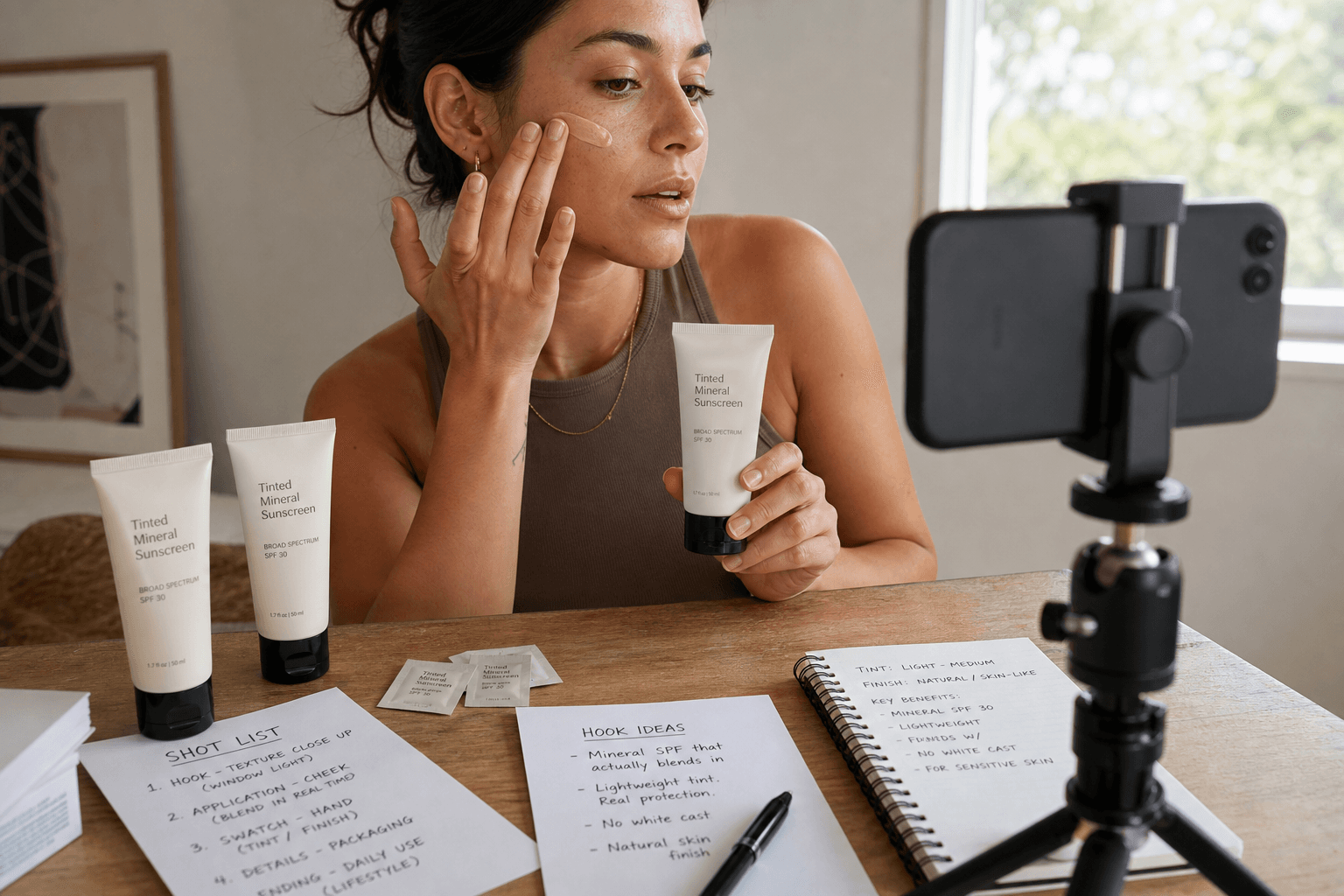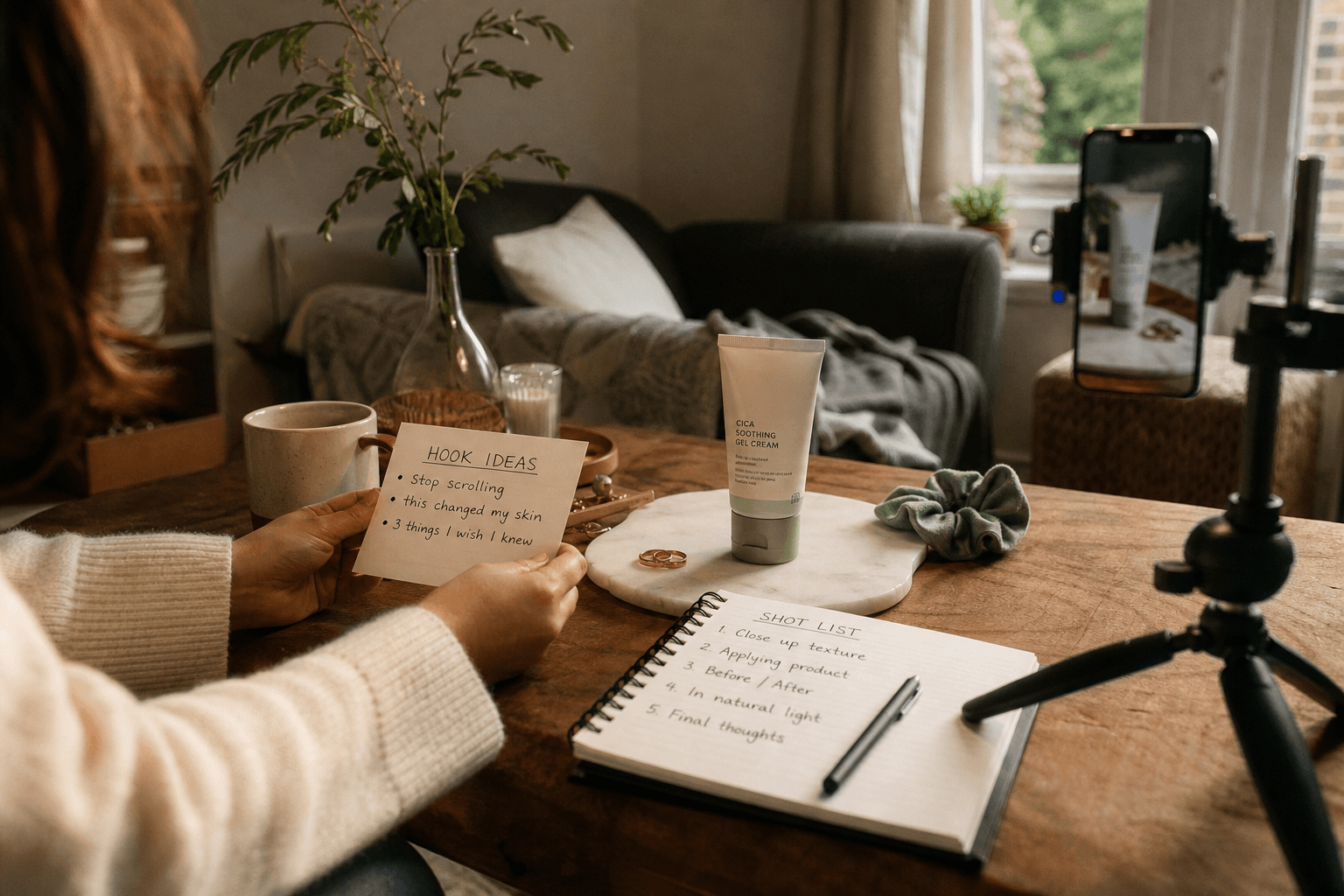
A creator can have a beautiful portfolio and still be wrong for your next video. Their work might be built around travel, dramatic transitions or polished unboxings, while you need someone to explain why a storage container fits in a crowded kitchen drawer.
The mismatch usually becomes obvious after the footage arrives. By then, the product has shipped, the deadline is closer and “could we make it feel more natural?” is doing a lot of work in the feedback document.
Finding the right UGC creator starts earlier. Get specific about what the viewer needs to see or understand, then look for evidence that a creator can deliver it. A shortlist built around the job makes the rest of the collaboration easier to judge.
Define what you're buying before you start searching
There are two different needs that often get bundled together: someone who can make useful content for your brand, and someone whose audience you want to reach. A creator may satisfy both. You shouldn't assume that one follows from the other.
If the video will run through your brand's account or advertising, evaluate the creator's ability to make the content you need. If the collaboration includes distribution through their account, audience relevance and the publishing arrangement become part of the decision as well.
Say you sell a compact coffee grinder and need a demonstration for people making coffee in small apartments. You need a believable kitchen setting, clear footage of the process and a creator who can explain what fits where. A large following doesn't answer any of those production questions. A smaller creator's careful kitchen demonstrations might.
Before searching, write a sentence that ends in an observable outcome: “The viewer should understand how this grinder fits into a small morning routine.” That is a more useful starting point than “We need authentic content for awareness.”
Before you compare quotes, decide whether you are buying footage or a finished package. Our ready-to-post UGC cost guide walks through creator work, editing, usage and delivery terms, with Zagged’s published price and minimum order shown together. Use it to request comparable scopes before choosing a creator or production partner.
Read the video transcript
A great-looking creator portfolio doesn't always mean a great fit for your product. Start with what the viewer needs to understand, before you start searching. Imagine you're selling a compact coffee grinder. You need someone to show how it fits into a small kitchen routine, not just hold the box. Watch several recent videos. Can you see the product clearly? Are the steps easy to follow? A big following doesn't answer those production questions. Before comparing quotes, agree on the deliverables, deadline, feedback process, and where you'll use the footage. Otherwise, two prices may describe completely different jobs. Then commission one paid test that resembles the work you need. If a control disappears off-screen, ask for a clearer shot. Give feedback the creator can act on. The pilot tells you about the work and the collaboration. It doesn't guarantee campaign results. Choose a creator who can make your product easier to understand.
Turn the brief into something you can recognize in a portfolio
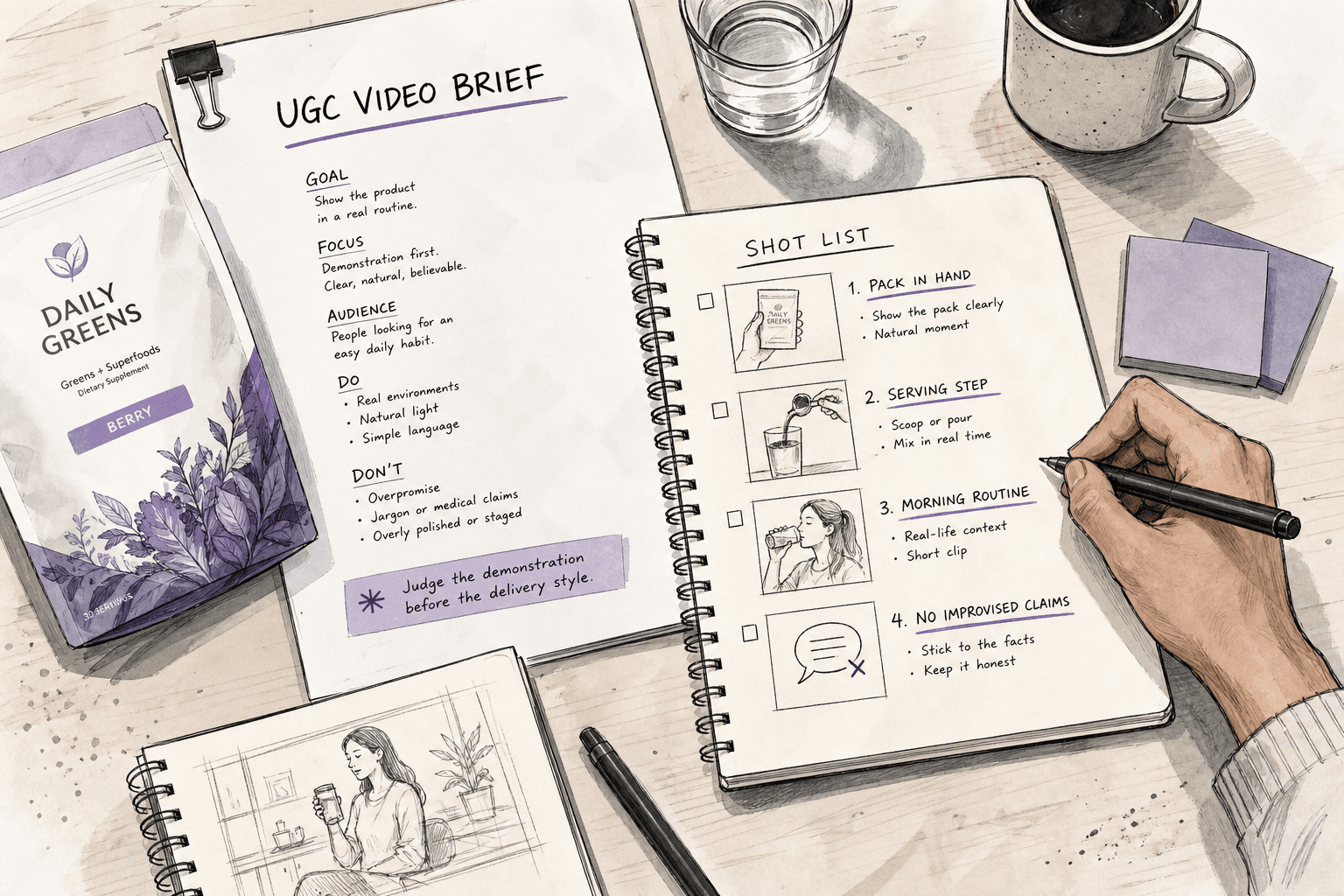
A strong brief helps you choose a creator as much as it helps the creator film. It makes the required work visible before either side agrees to it.
For the grinder brief, a useful excerpt would read: “Show the grinder on a compact kitchen counter beside a mug. Demonstrate filling it and putting it away. Let the viewer see the space it takes up. Explain the sequence in your own words, using only the product information we've supplied.”
That leaves room for personality while giving you something concrete to evaluate. Can the creator keep a small product in focus? Do their hands obscure the step they're explaining? Does their delivery make a simple routine harder to follow?
The rest of the brief should make the commercial scope understandable: the deliverables, intended channels, deadline, feedback process and requested usage. Discuss those points directly and put the agreed scope in writing. Don't let the word “UGC” stand in for an agreement about where content can be used.
When the scope is still vague, a creator's quote is answering a different question from the one you think you're asking. Resolve that uncertainty before comparing prices.
For a concrete comparison, Zagged’s UGC portfolio includes a Macra ingredient explainer, a Noble Origins routine integration and an Unvault creator explainer. These labels point to different jobs for the footage: explaining an ingredient, showing where a product fits into a routine, or introducing an unfamiliar offer. When reviewing a candidate, ask which job their sample demonstrates and what your brief would require them to do differently. The portfolio is evidence of creative formats, not a claim about sales or advertising performance.
Search where you can inspect the work
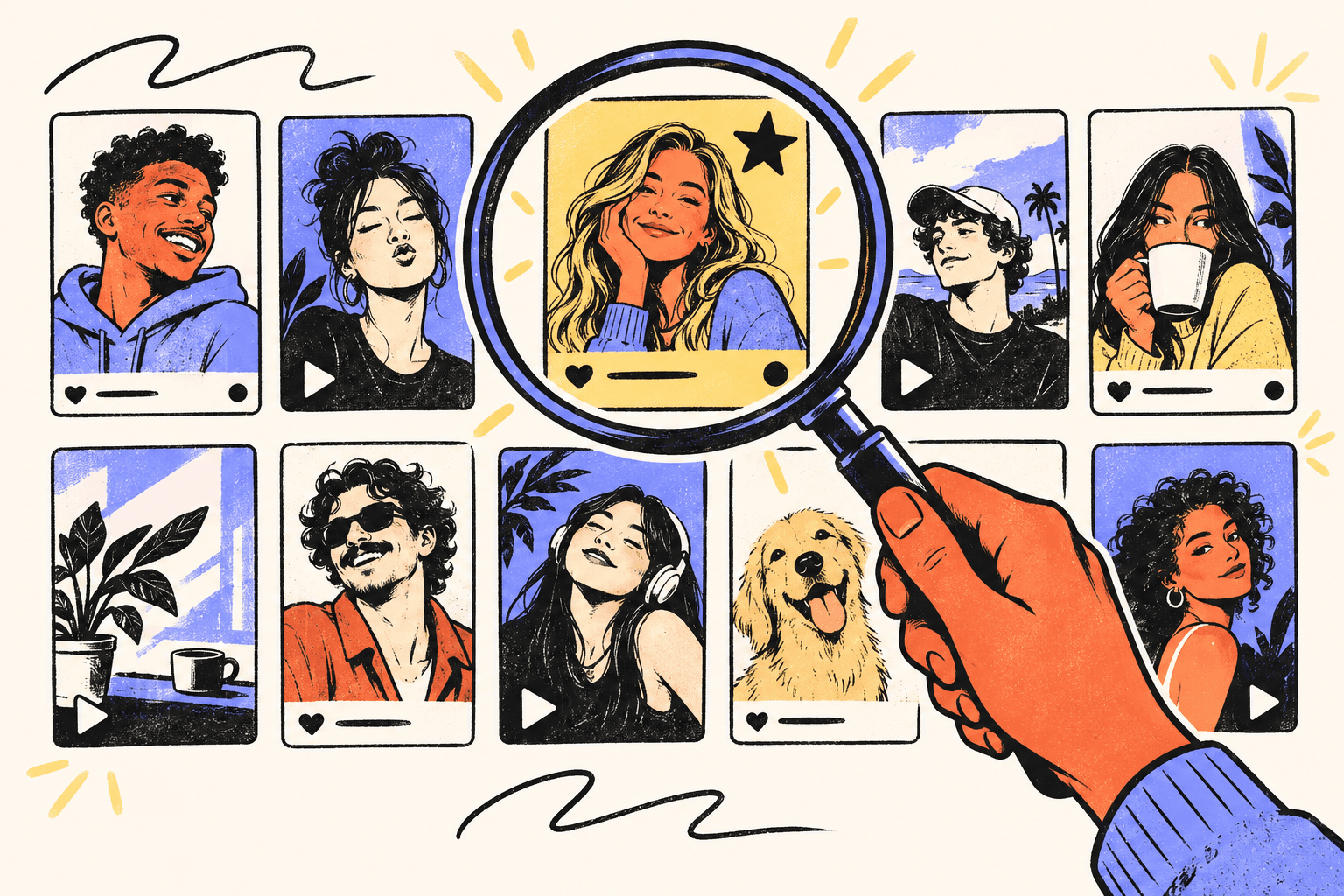
Native platform search is useful because it lets you start with the behavior you need. Look for people already demonstrating a process, answering questions or explaining products in a relevant setting. Searching only for “UGC creator” can produce portfolios that look increasingly similar while telling you little about the task in front of you.
For the grinder example, you might explore small-kitchen routines and coffee preparation, then watch the creator's recent work beyond a single strong post. The aim is to see whether their explanation and production choices hold up across several videos.
Platform marketplaces can help organize that search. TikTok One supports direct invitations, project invite links and open applications, with creator information and access affected by region. Those are sourcing routes, not a guarantee of fit. TikTok’s guide to creator collaboration.
Meta's description of Instagram's creator marketplace includes creator portfolios and filters for creator and audience attributes. Its 2024 announcement explains the workflow; check current access in your own account rather than assuming every feature is available everywhere. Meta’s creator marketplace overview.
Referrals can be useful too, provided you ask what the recommendation is based on. “They were great to work with” becomes more informative when you learn whether that means clear communication, strong demonstrations, dependable delivery or good performance in a particular campaign.
Compare evidence, not a general feeling of “on brand”
An aesthetic preference can disguise a production requirement. Before rejecting a creator because the work doesn't look like your feed, ask which specific choice would make the commissioned video less useful.
A bright, energetic creator may be a strong fit for a food demonstration and a poor fit for a quiet, detailed assembly tutorial. Neither is universally better. The brief determines what matters.
For each serious candidate, save a few pieces of relevant work and write a short assessment against the same questions. Does the viewer understand the point? Is the product visible when it needs to be? Can the creator explain a sequence without relying on constant cuts? What would they need from you to make this particular video?
Record evidence rather than adjectives. “Shows the controls in close-up while explaining them” is useful. “Premium vibe” is difficult for another teammate to challenge or act on.
Then separate what you know from what you haven't tested. A portfolio can demonstrate filming ability. It cannot tell you exactly how a new collaboration will handle your product, deadline or feedback. Those uncertainties belong in the paid pilot.
Creator fit and production ownership are separate decisions. If you have found capable people but cannot coordinate the brief, edits and reviews, use the creator versus agency workload comparison to assign those responsibilities. If the intended output is a paid Facebook placement, the guide to judging UGC product demonstrations for Facebook ads explains what evidence to look for in the footage before comparing delivery styles.
Use the first conversation to expose mismatched assumptions
A clear outreach message gives a creator enough context to respond thoughtfully. For example:
We're making a short demonstration of a compact coffee grinder for people with small kitchens. Your countertop preparation videos caught our attention because the steps are easy to follow. We'd like to discuss one paid test video for our brand channels. Could you share your availability and what you would need to quote the scope?
This is sample outreach, not a message from a real campaign. Its value is the information it gives both sides: why the creator is relevant, what the work involves and where the conversation needs to go next.
Pay attention to the questions that come back. Asking which product features are verified, whether the product can arrive in time, or what usage you need can reveal that the creator is thinking through the work. A quick “yes” without context isn't enough evidence on its own.
If your answer to every question is “We're flexible,” decide where you actually are flexible. Creative freedom works better when the essential requirements are clear.
If the pilot includes alternative openings, decide what you will hold constant before filming. Our guide to TikTok hook testing explains how to compare openings without confusing a change in delivery with a change in the underlying promise. Put those variations into the creator brief template, so the creator knows which lines need separate takes.
Make the paid pilot answer the remaining questions
Start with a bounded assignment that resembles the work you'd commission again. A highly scripted product close-up won't tell you much about someone you're hiring to explain a complicated routine on camera.
For the grinder, one concept with a clearly agreed scope could test the setting, demonstration and explanation together. Judge the first delivery against the brief before adding new preferences. If a required action is missing, name it. If the shot is present but the explanation is hard to follow, explain where the viewer loses the thread.
For example: “At the point where you change the setting, the control is outside the frame. Could we see that adjustment while you explain it?” That gives the creator a solvable problem. “Can this be more engaging?” leaves them guessing.
A pilot can tell you a great deal about production and collaboration. It won't automatically establish how the asset will perform once distributed. Keep those evaluations separate so a good creative partnership isn't judged solely by the first campaign result.
A roster is easier to scope when the recurring work is clear. Use your organic social production plan to decide which customer questions need demonstrations, explainers or ongoing creator stories before you recruit more people.
Build a roster around the work you'll repeat
Once a collaboration works, save the reasons it worked. Note the products or topics the creator explains well, the production setup they can reliably provide, and the kind of brief that gives them room to do good work.
That turns the next search into a more informed decision. You may need a new creator because the audience or setting has changed. You may simply need a better brief for someone who already understands the product.
If your team needs fully edited human UGC ready to post, Zagged’s UGC production can help turn the brief into finished creator videos. Bring the product, the viewer’s question and the channels you plan to use; a TikTok demonstration and an Instagram ad may need different edits even when they begin with the same footage. Whoever handles sourcing, give every creator a clear job before asking them to make content.
Creator production brief
Turn a product idea into an assignment a creator can quote and film. Replace the example with your own details, then download the brief.
Send this before agreeing scope. Ask the creator to flag any shot they cannot demonstrate accurately. Confirm commercial terms separately; a creative brief does not grant usage rights.
See a completed example
- Product and viewer question
- Example: A compact coffee grinder. Can it fit on a small counter and make a single morning serving?
- What the camera needs to show
- Place the grinder beside a mug for scale. Load one serving, show the controls, and show the cleanup. Do not claim results we have not substantiated.
- Creator and setting
- A creator comfortable explaining a routine in their own words, filming in an ordinary kitchen with clear sound.
- Opening and spoken explanation
- Start with the cramped counter, then show where the grinder fits. Explain one benefit while demonstrating it; avoid reading a list of features.
- Finished files and source footage
- Confirm number and duration of finished videos, aspect ratios, captions, clean exports, alternate openings and whether raw footage is included.
- Claims and required disclosures
- Attach approved product facts. Flag sponsorship or AI disclosures required for the intended use. Do not script personal experience the creator has not had.
- Commercial terms to confirm
- Agree intended channels, paid use, duration, territory, likeness permissions, music clearance, revision scope and who approves publication.
- Review and delivery
- Name one approver. Set dates for concept, first cut and final delivery. Consolidate feedback into one response.
Make your own brief
Your entries stay in this tab. Download before leaving; they are not saved or sent to Zagged.
Sources & further reading
- TikTok: About collaborating with creators on TikTok One projectsads.tiktok.com
- Meta: Making it easier for brands and creators to collaborate on Instagramabout.fb.com
Published by Zagged Editorial. Updated .