The expensive mistake is approving a quote that only covers layout
You approve a slideshow proposal on Tuesday because the sample looks tidy and the launch date is already too close for comfort. By Thursday, production is stuck. The vendor is waiting for slide order, cover copy, approved claims, and direction on what changes for TikTok versus Instagram. Your team thought those things were included. The vendor thought you were supplying them.
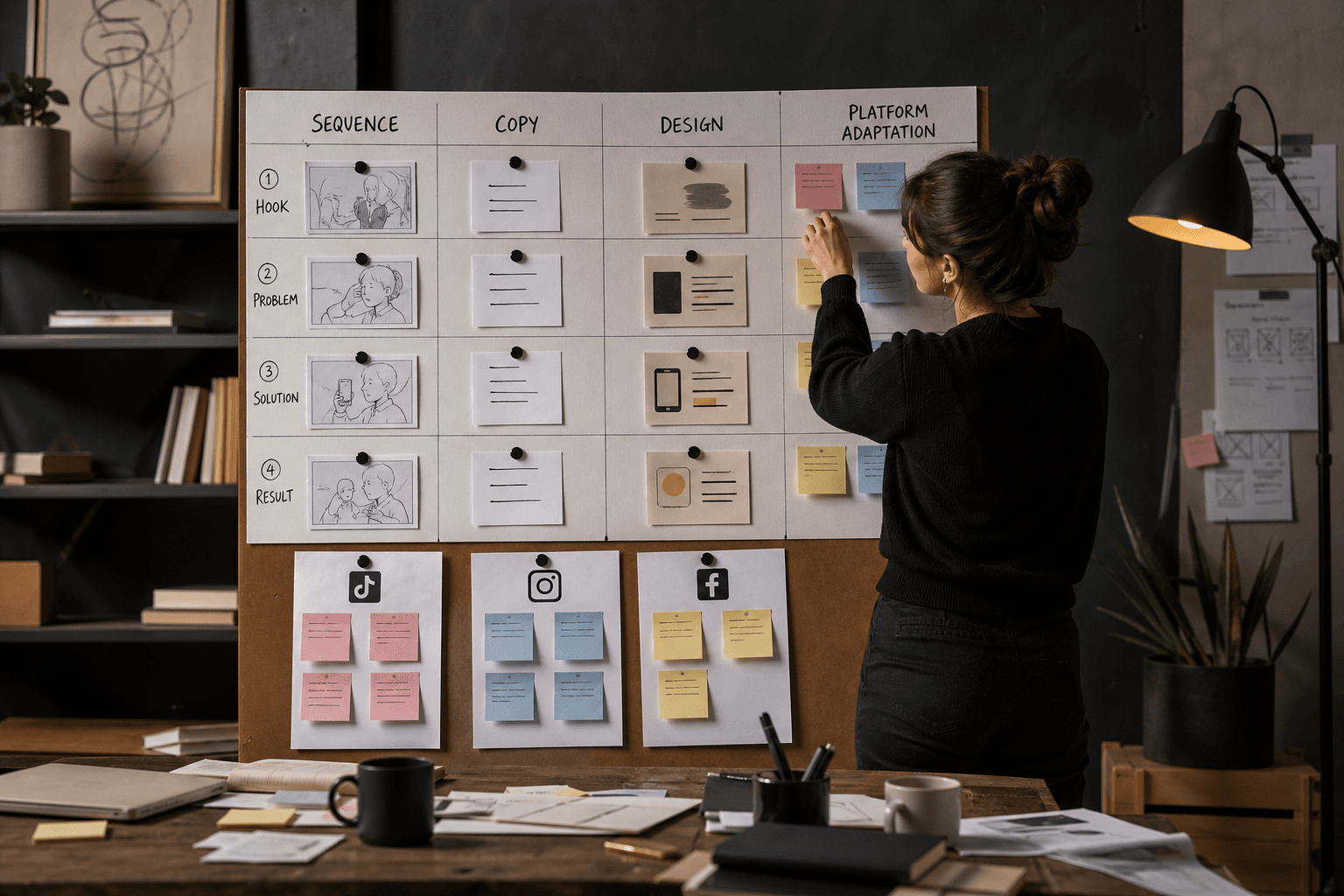
That is the real buying problem with a social slideshow production service. Most weak comparisons focus on style, card count, or revision rounds. The useful comparison is simpler and more annoying: who owns the sequence, the copy, the design system, and the platform adaptation?
If the proposal only says “carousel design” or “slideshow design,” you may still be buying the easy part. The harder part is editorial judgment: what the first slide promises, what each frame needs to prove, which claims can be stated cleanly, and whether the same idea should be rebuilt differently for TikTok, Instagram, and Facebook.
That recommendation applies most clearly to ecommerce and consumer brands using still assets to explain a product, routine, bundle, comparison, or offer. I’d choose differently if your team already has a finished storyboard, final copy, approved claims, and somebody in-house who understands where the post will run. In that case, design-only support can be a perfectly sensible buy.
If you still need to decide whether a slideshow is the right format at all, this guide on when TikTok slideshows beat a rushed shoot is worth reading first. For some products, still frames do enough work. For others, motion, texture, fit, or a person using the thing is the proof.
Start by separating layout from editorial ownership
A slideshow meant for native social posting is not just a set of arranged assets. TikTok’s Photo Mode is a swipeable still-image format where viewers move through images at their own pace, and TikTok says posts in that format can include music and descriptions up to 2,200 characters in its format overview from October 2022 (TikTok Photo Mode overview). TikTok also says photo slideshows follow the order in which images are uploaded (TikTok photo tutorial).
That matters because image order is not production admin. It is the story. Whoever decides the order is deciding what the viewer understands first, what they understand second, and whether the ending earns a click, swipe, or save.
Most proposals fall into one of three scopes:
| Scope | What the provider is really doing | What your team still owns | Best fit |
|---|---|---|---|
| Design-only | Laying out supplied slides and copy | Storyboard, copy, claims, platform choices | In-house team already has the narrative finished |
| Editorial + design | Turning notes and assets into a slide sequence with copy | Product truth, approvals, final sign-off | Lean team that needs help shaping the post |
| Platform-adapted production | Building the narrative and versioning it by platform or placement | Product truth, approvals, posting decisions | Brand using one concept across TikTok, Instagram and Facebook |
The language may sound similar across quotes. The workload is not. This is the same scope problem buyers run into with creator content, which is why Zagged’s guide on comparing ready-to-post UGC scope before price is relevant here too. A cheap line item can be expensive once your own team has to finish the strategic work around it.
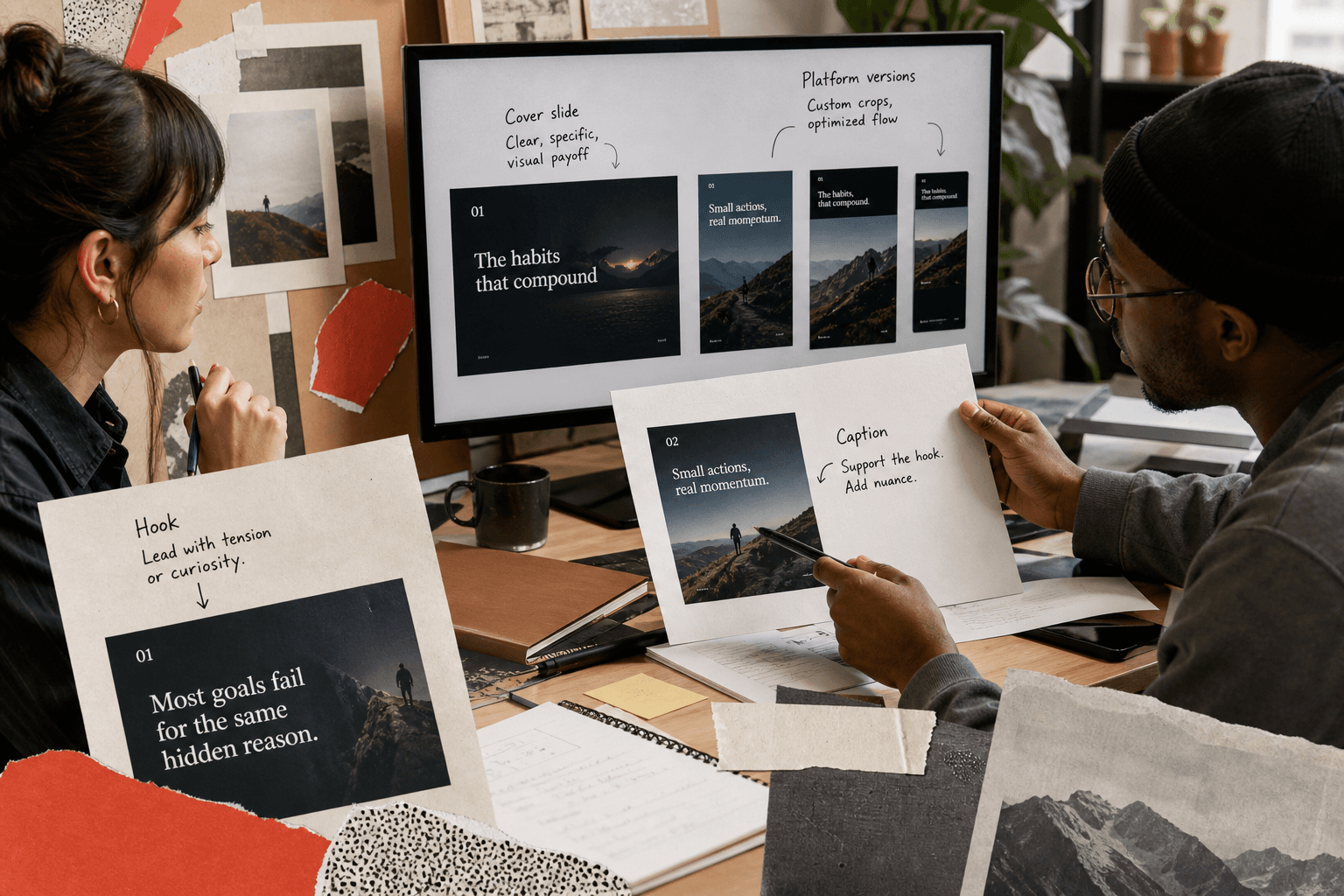
Read the video transcript
You approve a neat slideshow quote, then everything freezes because nobody agreed who would shape the story, write the copy, or adapt it for each platform. The article's point is that layout is often the easy part; sequence, claims, and platform choices determine whether viewers understand the post and whether teams can ship it. Imagine a skincare brand with renders and ingredient notes but no finished narrative. A pricier proposal can be smarter if it includes the hook, slide order, and copy drafting. If legal removes one claim, someone must rebuild the slide so the story still works. That's why styling supplied words isn't the same as owning the message. Ask providers to spell out sequence, copy, design, and platform adaptation before kickoff. That helps you see whether TikTok, Instagram, and paid uses need separate builds. If your team already has approved copy and placements, design-only can work. If not, the safer buy is the scope that makes hidden editorial decisions visible upfront.
What changes between TikTok, Instagram, and Facebook
The same idea can travel across platforms. The build should not be assumed to stay identical.
On TikTok, the proposal should spell out who decides image order, cover logic, caption writing, and music handling. Music is not a decorative afterthought for brands. TikTok for Business says Business Accounts can choose tracks only from the Commercial Music Library when adding sound (TikTok Commercial Music Library rules). TikTok support also distinguishes commercial-use music rules by account type and use context (TikTok commercial-use music support).
That does not tell you a slideshow will perform better with music, or that every brand should build the same way. It does tell you one practical thing: if a provider includes soundtrack selection for TikTok, ask whether they are selecting for a business-account posting context. If they are not, you may receive an asset that looks finished and is not actually usable.
Instagram and Facebook raise a different set of questions. The issue is less “what aspect ratio exists” and more “what reading job does the first frame need to do in-feed, and who is posting this asset?” If creator participation or compensated posting is part of the plan, Instagram’s paid partnership label rules may apply in that posting context (Instagram branded content guidance). That does not mean every brand-made carousel needs the label. It means your production brief should distinguish brand-owned posting from creator posting before design starts.
For paid placements, separate the job again. TikTok’s Image Ads and Carousel Ads playbook says carousel ads use one ad caption and one call-to-action button, and it recommends vertical 9:16 images because other ratios may show black bars or get cut off in feed (TikTok Image Ads and Carousel Ads playbook). Useful format documentation, yes. Proof of universal organic best practice, no.
So when a provider says, “We’ll make one asset for all platforms,” ask one follow-up question: do you mean one concept adapted for each platform, or one export copied everywhere?
Worked example: the quote says “design,” but you need a story
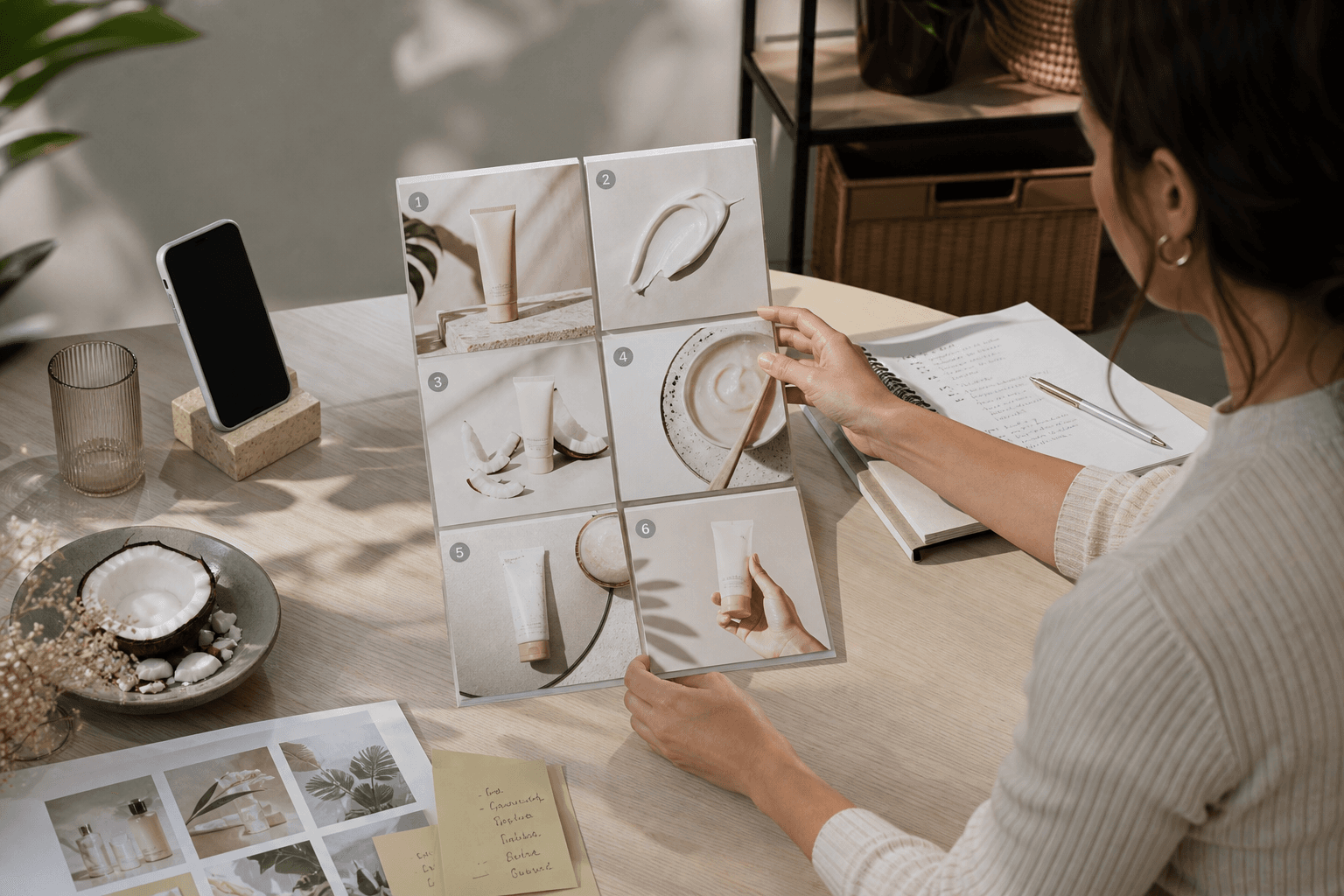
Say you sell a skincare routine with a serum and moisturizer. You have product renders, ingredient notes, pack shots, and legal review is still trimming what can be said about visible results.
You get two proposals.
Proposal A says:
1x 8-slide carousel design from supplied copy and images
Proposal B says:
1 concept route, opening hook, slide-by-slide sequence, on-slide copy drafting from supplied product notes, Instagram carousel master, and one paid-social adaptation after claim approval
If nobody on your team has time to turn ingredient notes into a readable customer story, Proposal B is probably the better buy even if it costs more. Proposal A assumes the difficult editorial decisions are already made.
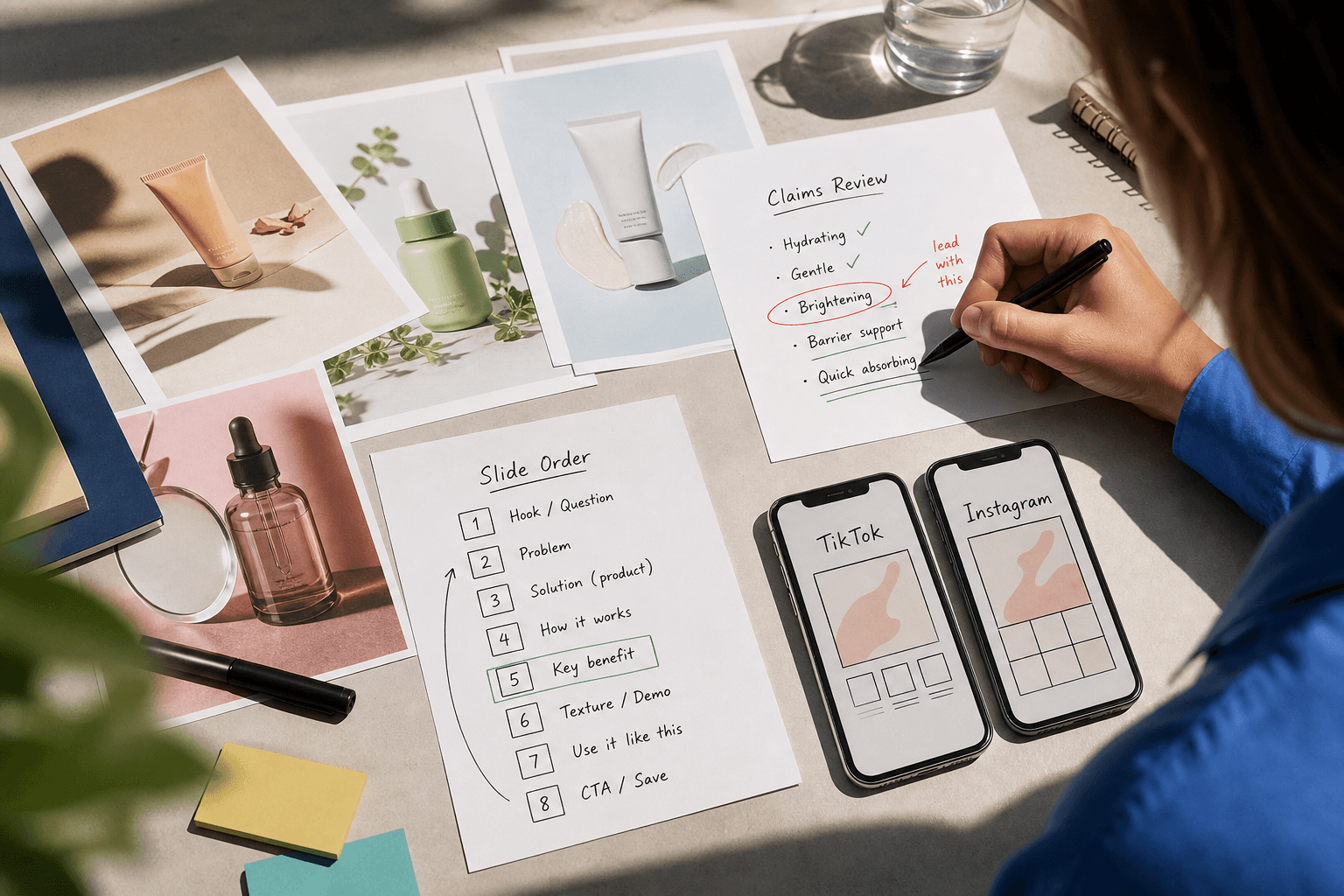
Here is the kind of working sequence note you should expect when editorial scope is actually included:
Cover: “Why your routine feels heavy by step three”
Slide 2: show the two-product routine together, not a single hero bottle
Slide 3: explain where the serum fits in plain language
Slide 4: explain what the moisturizer adds
Slide 5: ingredient support using only approved wording
Slide 6: who the routine is for
Slide 7: simple usage order
Slide 8: CTA to shop the pair
Now look at how that same example carries into approvals. If legal strikes one line on Slide 5, who rewrites the slide so the sequence still makes sense? If the answer is your team, the provider is not owning copy. They are styling copy.
Then look at paid use. If the team later wants a carousel ad or static ad variants, inspect whether the quote prices adaptation separately. TikTok ad carousel constraints are not the same as an organic slideshow post (TikTok Image Ads and Carousel Ads playbook). A provider who treats them as identical is either skipping work or assuming you will absorb it later.
Worked example: one concept, two platform builds
Now imagine a supplement brand launching a magnesium powder on TikTok and Instagram. The internal brief says, more or less, “Use our product photos and key benefits on both platforms.” That sounds efficient. It is usually how revisions breed.
A weak request looks like this:
Need a 6-slide post for TikTok and Instagram. Use our product photos and benefits.
A stronger request looks like this:
Build one concept with separate TikTok and Instagram versions. Keep product statements within the approved claim sheet. For TikTok, prioritize slide order, caption support, and business-account-safe music assumptions. For Instagram, prioritize cover clarity and on-slide readability in-feed.
A useful producer note in response might say:
TikTok version opens on the problem and moves into routine context quickly because the viewer controls the swipe pace in Photo Mode. Instagram version puts more explanation on the first two cards because the cover and first frame must earn the swipe in-feed.
That is the kind of reasoning you are buying when platform adaptation is real.
Now carry the same example one step further. Suppose the provider suggests AI-generated lifestyle backdrops for a few product shots. Fine, maybe. But ask them to state that plainly. Meta says it labels AI-generated or altered content using signals and self-disclosure, with more prominent labels in some higher-risk cases (Meta’s approach to labeling AI-generated content). That does not create a universal rule for every small edit, and it does not automatically transfer to TikTok. It does inform one buying decision: vague language like “enhanced visuals” is not enough if synthetic elements are part of the production method.
What assets and approvals a slideshow production job usually needs
Before you commission anything, ask the provider what they need before design begins. If the answer is only “logos and product photos,” expect confusion later.
A useful production input list usually covers four groups:
- source assets: product photos, pack shots, routine images, approved reviews or testimonials you’re allowed to use, existing templates if relevant
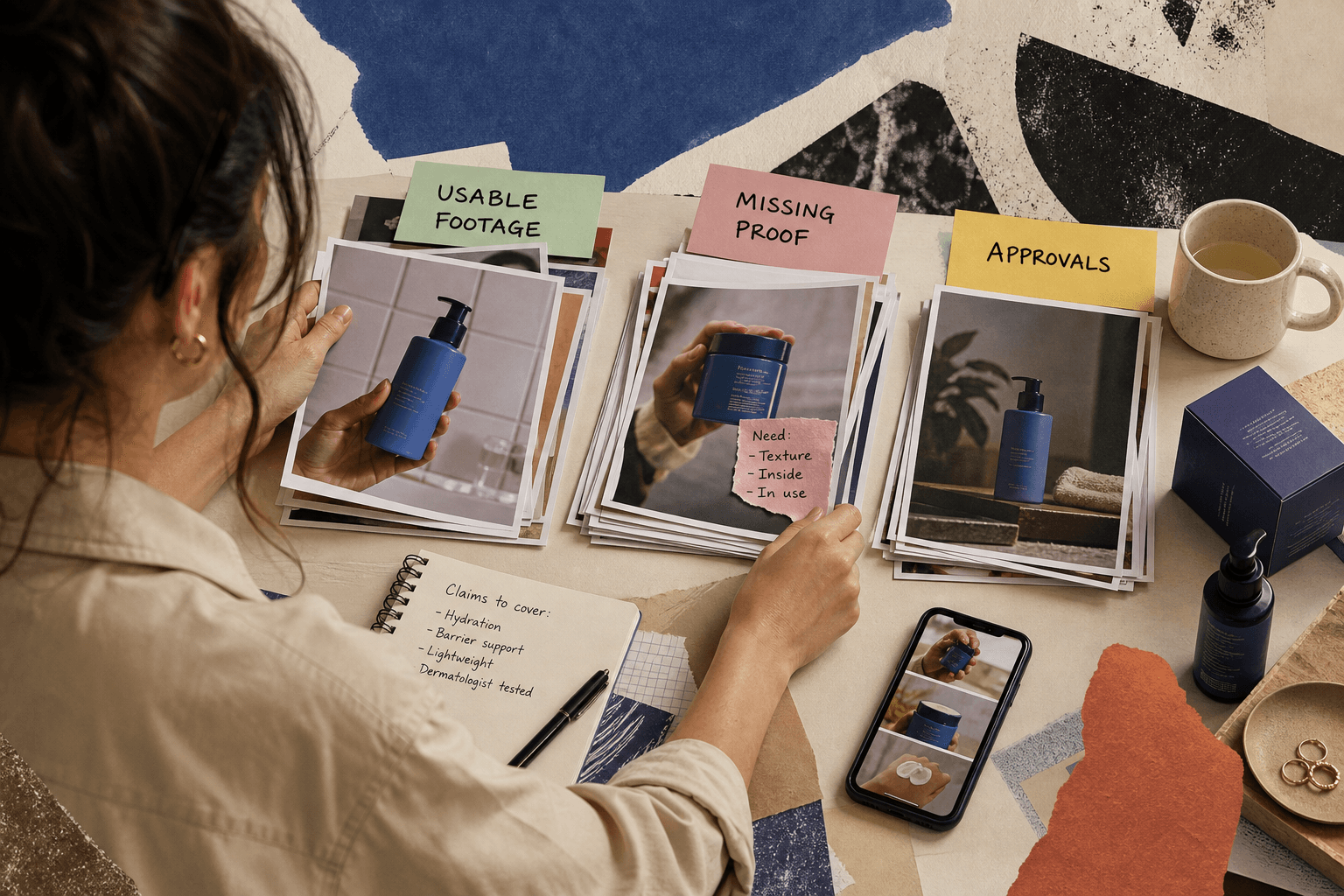
- truth constraints: approved claims, prohibited phrasing, required disclaimers, and any visual restrictions
- placement intent: organic brand-owned post, paid adaptation, creator posting, or some combination
- approval path: who approves sequence, who approves copy, and who signs off regulated or legal language
Notice what is missing from that list: generic talk about being “on brand.” That matters, but it does not rescue a weak brief.
If you want a provider to own more of the sequence and copy, your own materials need to be organized enough to let them do it accurately. A messy claim sheet and a six-person approval chain can humble even a very good producer.
When design-only is the right buy
Design-only is not bad. It is just narrower than many buyers assume.
Choose a design-only slideshow vendor when your team already has the following in hand: a finished storyboard, approved copy, final claims, chosen placements, and one person internally who can answer platform-specific questions without starting a committee meeting. In that setup, outside design support can be efficient because the editorial burden is already settled.
Choose broader editorial and adaptation support when your team has product truth and assets but not a finished narrative, or when one concept needs to become several usable platform versions. That is often the better fit for lean ecommerce teams working across TikTok, Instagram, and Facebook without a dedicated in-house social producer for each one.
If the question is really whether a slideshow should stay brand-led or move into creator-led proof, this guide on evaluating UGC creator fit will help you sort a different decision: whether a person’s credibility is part of what the viewer needs in order to believe the message.
For teams comparing outside help with in-house production, it’s worth reviewing Zagged’s social content production process to see how slideshow and carousel scope can be defined before kickoff. If creator-led assets are also under consideration, Zagged’s human UGC offer publicly lists concept and hook, a real creator, editing and captions, a final video file, and paid and organic social usage. The live checkout currently shows 25–200 fully edited videos at $99 each with a $2,475 minimum order, as listed on the offer page at the time of writing (Zagged live UGC pricing). That is Zagged’s own offer, not an industry average, and you should still confirm rights, revisions, turnaround, raw footage, and permissions in writing.
The approval question to send back before kickoff
Ask each provider to rewrite their scope under four labels: sequence, copy, design, and platform adaptation.
If they can answer that plainly, you can compare proposals on actual work. If they cannot, the missing work will probably land back on your team after kickoff, when it is slower, more awkward, and somehow always urgent.
Your next move is to send one real concept and ask for a revised scope that states who owns slide order, on-slide copy, caption writing, and separate TikTok, Instagram, and Facebook versions. Approve the proposal that makes those decisions visible before production starts.
Social slideshow storyboard
Build a sequence around one customer question. Decide what each frame contributes before collecting decorative product photos.
The sequence below is an example, not a required slide count. Combine or remove frames that repeat the same point, and verify the export requirements for your chosen platform.
See a completed example
- Reader question and destination
- Example: Which size bag fits a laptop and a day’s essentials? An Instagram carousel for people comparing sizes.
- Opening frame
- Show both bags beside the same laptop. State the specific choice: “Which size fits your everyday carry?”
- Evidence frames
- Use the same camera angle for each bag. Show the actual laptop, charger and bottle inside; label only measurements that have been verified.
- The tradeoff
- Explain the extra carrying room versus external size. Avoid calling one option best for everyone.
- Closing decision
- Tell the reader what to measure or compare next. Link to the relevant product information when the placement supports it.
- Design and accessibility
- Use readable text and consistent comparison scale. Supply descriptive alt text where supported. Keep important information in the caption too.
- Assets and approval
- Attach approved photos, measurements and copy. Identify one approver, placement-specific exports and a final check on a phone.
Make your own brief
Your entries stay in this tab. Download before leaving; they are not saved or sent to Zagged.
Sources & further reading
- TikTok editing tools and Photo Mode overviewnewsroom.tiktok.com
- TikTok tutorial: photos on TikToknewsroom.tiktok.com
- TikTok Commercial Music Library rulesads.tiktok.com
- TikTok commercial use of music supportsupport.tiktok.com
- TikTok Image Ads and Carousel Ads playbookads.tiktok.com
- Instagram branded content and paid partnership label guidancefacebook.com
- Meta approach to labeling AI-generated contentabout.fb.com
- Zagged UGC offerzagged.com
- Zagged live UGC pricingzagged.com
Published by Zagged Editorial. Examples are illustrative unless a source is identified. Updated .