A lot of teams buy clipping for volume and discover, a week later, that they bought admin.
The source footage looked promising: a founder interview, a creator routine, a webinar, a podcast appearance. The returned files are all vertical. Technically, the job is done. In practice, one clip starts halfway through a thought, one needs music the brand can't use commercially, and three others make sense only if you watched the full video first. Now someone on your team has to fix the openings, re-check claims, rename exports and explain why "12 clips delivered" did not feel like help.
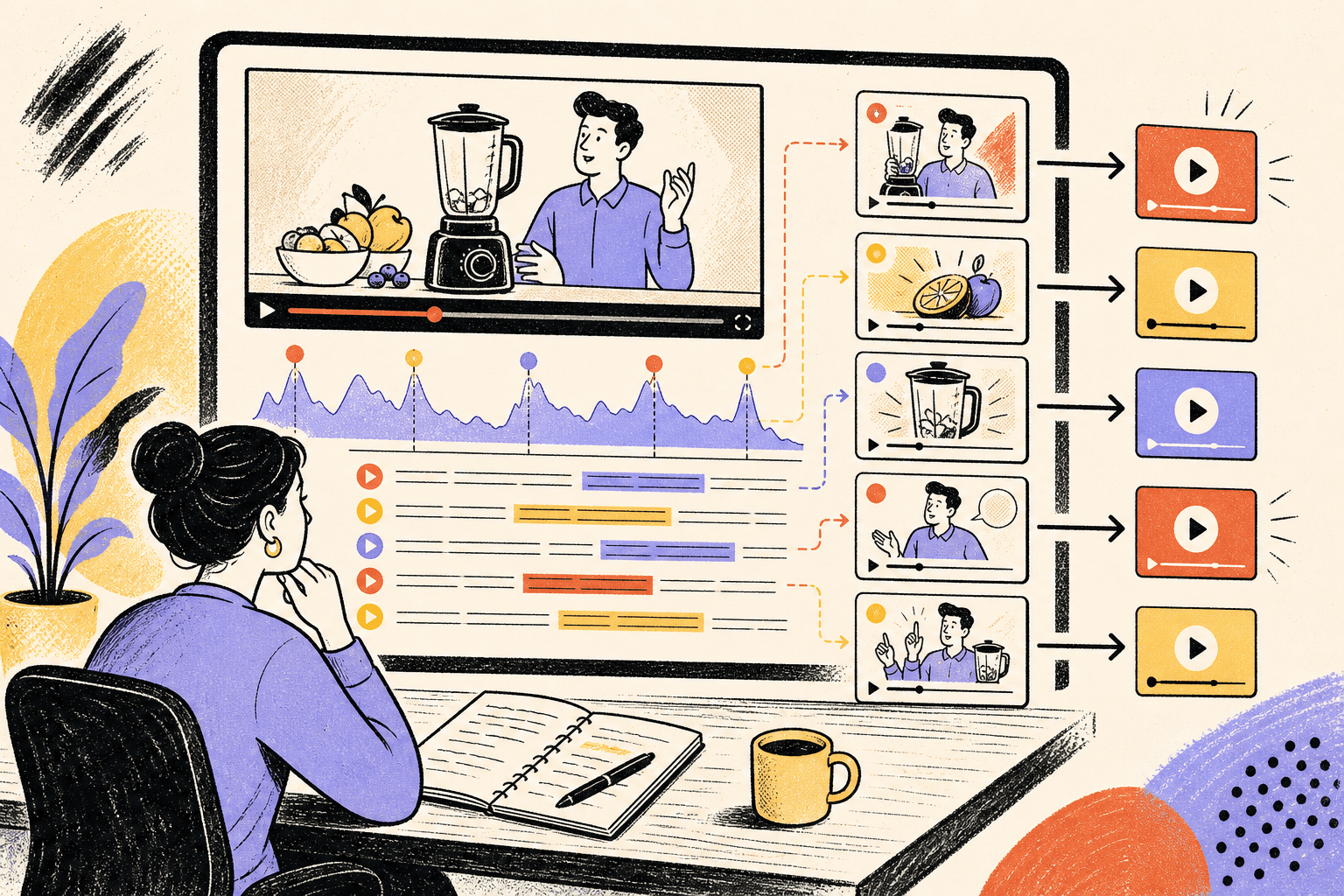
That is the real buying decision. A video clipping service is worth hiring when it removes editorial and operational work, not when it simply moves trimming to an outside editor. For ecommerce and consumer brands working across YouTube, TikTok and Instagram, the useful service does four things well: it chooses moments that stand on their own, keeps the part that makes the statement true, edits for the placement instead of treating every platform as the same, and delivers files your team can actually review and publish.
Start with the job: selection, not scissors
If your team already knows the exact timestamps, the exact hook, the exact text treatment and the exact exports required, then you may just need editing labor. That's a narrower purchase, and often a cheaper one.
Most teams considering clipping are not in that position. Their real bottleneck is selection. They have too much footage, not too little software.
Zagged's guide on making each short worth watching is useful here because it frames the standard correctly: a short clip has to answer a viewer question with enough context to be credible. A clipping service earns its fee when it can find those complete thoughts inside the longer source.
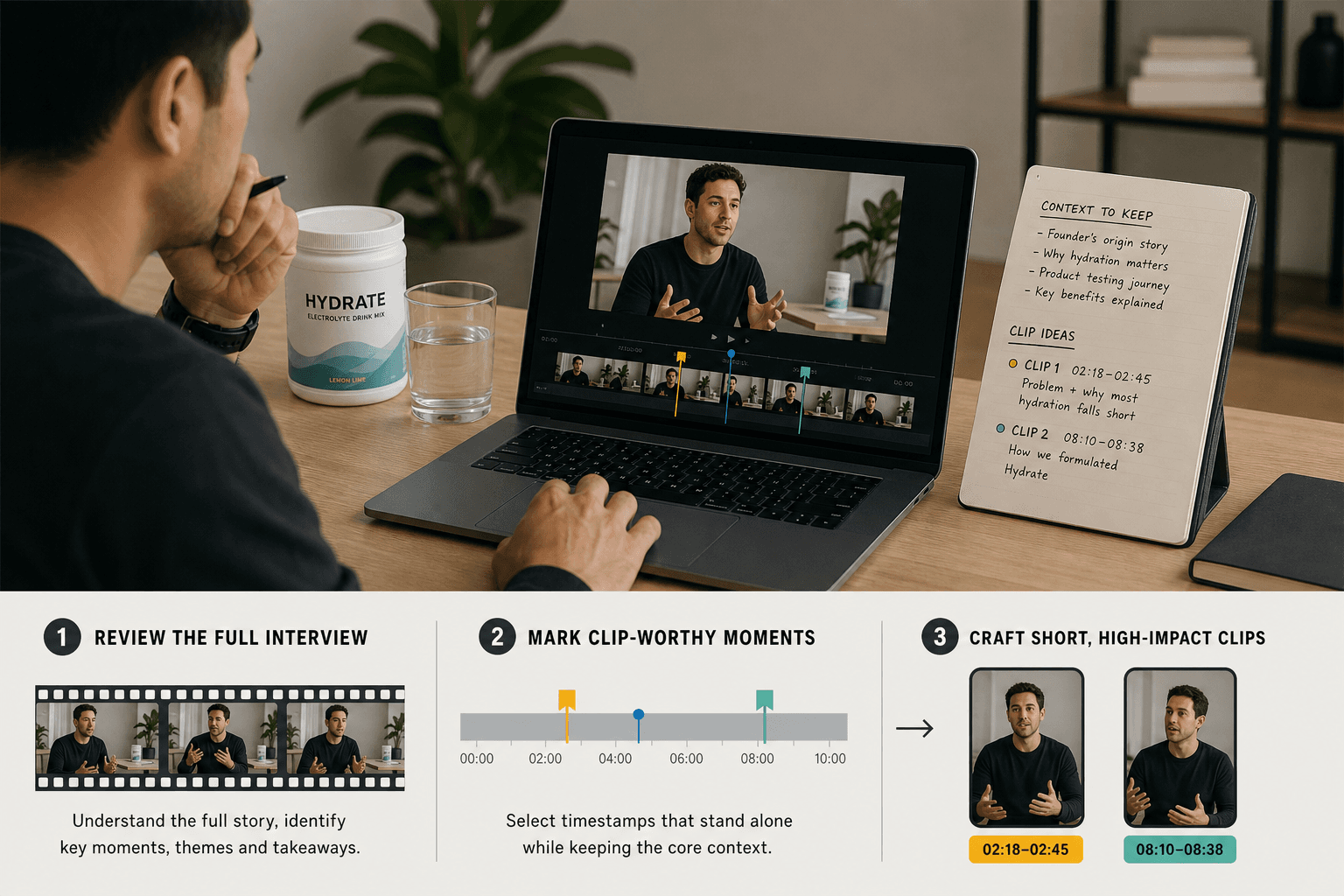
Say you sell a hydration mix and you have a 22-minute founder video about formulation. A weak clipping service may isolate the line, "We spent two years getting the formula right," because it sounds neat and emphatic. The problem is that it tells a cold viewer almost nothing.
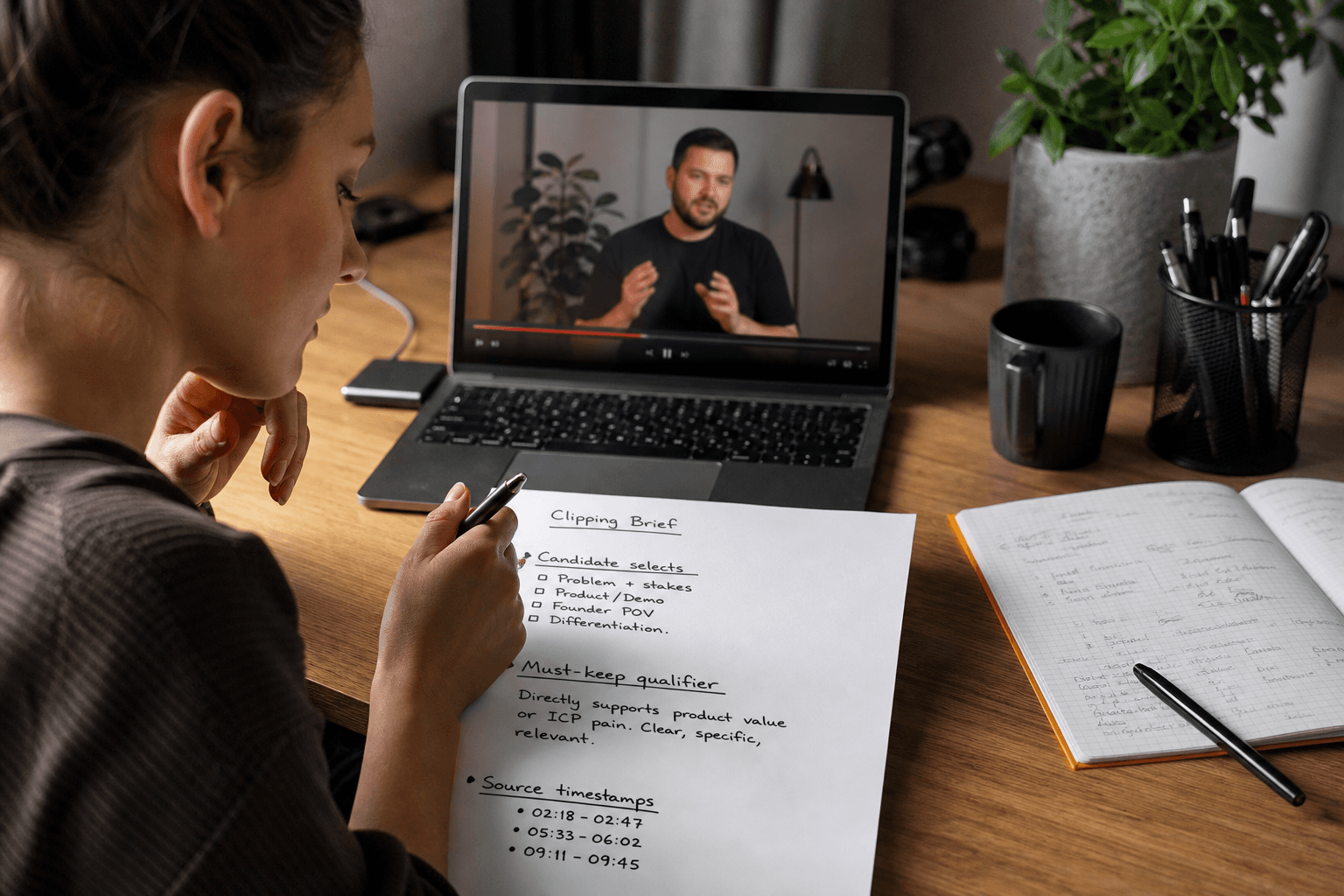
A better service would choose the section where the founder explains one customer problem and one concrete product decision. The brief note might look like this:
Clip candidate note
Use the section where the founder explains why they changed the sodium-to-potassium balance for people exercising in heat. Keep the line that narrows the claim to everyday hydration, not treatment of a condition. Open on the customer problem, not the company timeline.
That choice leads to a better edit:
Worked example: founder clip for YouTube Shorts and Instagram Reels
Opening text: "Why some hydration drinks still leave you wiped out in summer"
First spoken line kept: "We kept hearing, 'I'm drinking more, but I still feel rough after a run.'"
Supporting shots: scoop into glass, label close-up, founder on camera for the explanation, mixing shot
Decision note: keep the qualifying sentence about everyday hydration so review does not stall later
This is the first standard to use when you evaluate a provider. Ask who chooses the moments. If the answer is effectively, "You send us selects and we'll make them vertical," you are buying editing labor, not much editorial relief.
Read the video transcript
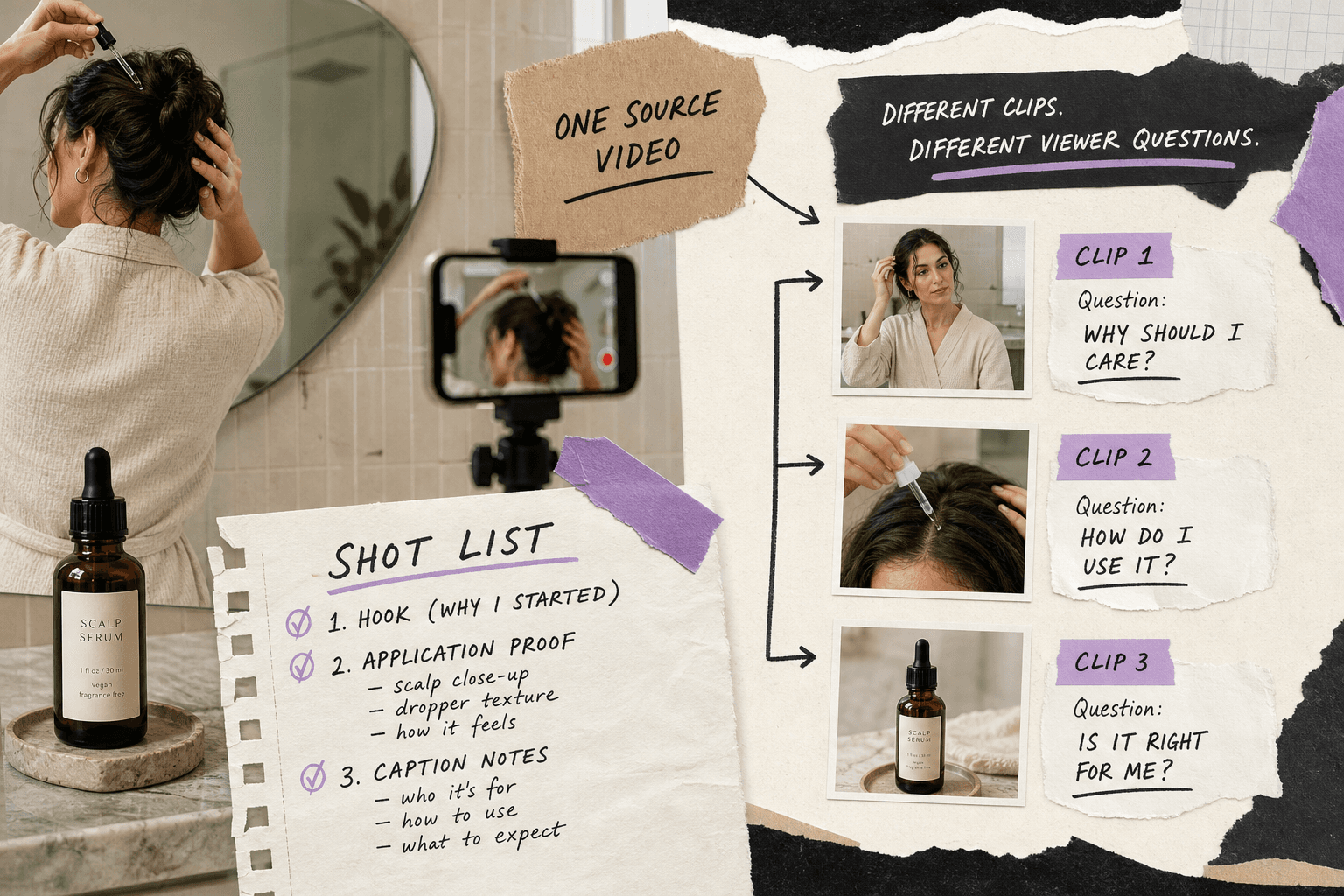
You hire clipping to save time, then spend more fixing weak openings, risky music, and context gaps. The real problem isn't trimming video; it's still owning the hard decisions. A service is worth it when it removes editorial and operational load. That means choosing complete moments, keeping what makes claims accurate, and handing off usable files. In the hydration example, a better clip doesn't start with 'two years getting the formula right.' It opens on a summer problem and the product decision behind it. The article shows how the same routine footage can become different honest clips. One answers when to use the serum; another answers where to apply it. Platform rules can affect music, formatting, and future paid use, so one master export may not help much. Still, specs alone won't tell you what edit works best. Before hiring, ask who picks moments, what context stays, and how files are labeled for review. If answers stay vague, clip volume probably won't lighten your workload.
Context is what keeps the clip true
The most common clipping mistake is not ugly captions or the wrong crop. It is removing the sentence, shot or caveat that made the original statement accurate.
That matters even more for products that need proof, explanation or careful wording. Supplements, skincare, food, household products and apparel all have moments where the surrounding context does real work. A service worth hiring knows when a shorter cut becomes a worse one.
For example, imagine you sell a scalp serum and you have creator footage from a routine video. The source line is:
"I only use it on wash day, because too much product on day three makes my roots look flat."
A weak clip keeps only the first half because shorter looks cleaner on a timeline. A better editor understands that the second half is the reason the advice sounds believable.
Worked example: routine clip for TikTok organic
Hook text: "The scalp routine mistake that made my hair look greasy"
Shot 1: creator holding bottle near sink
Shot 2: application along part lines
Shot 3: dried hair, close shot at the roots
Spoken line kept intact: "I only use it on wash day, because too much product on day three makes my roots look flat."
Edit note: emphasize "wash day" and "roots look flat" in captions for scan readability
Now carry that same source footage into the next decision, because this is where clipping services either help or create more work.
The brand decides it also wants a second clip from the same recording, but this time the viewer question is application, not frequency.
Second clip from the same routine footage
Hook text: "Where I apply it so it stays off my lengths"
Opening shot: hand placement before any talking-head intro
Cut choice: remove the frequency line entirely, because this version is about placement
Decision note: hold the application shot a beat longer than feels fashionable; the proof matters more than speed here
One source file. Two viewer questions. Two honest edits. That is what you are paying for when clipping is done well.
Platform fit changes the work
A clipping service stops being worth the fee when it hands over one master file and calls that multi-platform delivery.
That does not mean every clip needs a wildly different creative concept for each platform. It means the provider should understand the practical constraints that affect whether the asset is usable.
YouTube treats Shorts as short-form vertical or square uploads and notes that uploaded Shorts can run up to three minutes, which affects what can reasonably stay in the cut and how your team plans handoff and publishing YouTube Shorts upload guidance. TikTok's business guidance says commercial users should use the Commercial Music Library for commercial activity, including organic business content, branded content and ads TikTok Commercial Music Library guidance. Meta's Reels ad guidance emphasizes 9:16 creative and placement-ready formatting for Instagram and Facebook Reels Meta Reels ad guidance, and Instagram limits access to the standard licensed music library for certain business uses while positioning Sound Collection as safe for commercial use in Reels and Stories Instagram music access rules.
Those sources do not prove that separate platform edits always outperform a shared cut. They do support a more useful recommendation: judge a provider by whether it can prepare clips for the way you will actually use them.
That becomes obvious when organic and paid use diverge.
Go back to the scalp serum footage. For an organic TikTok post, you might accept a looser open, lighter branding and a sound choice that matches your approved business workflow. But if the team may want to promote that clip later, the service should think earlier about commercially usable audio, clearer first frames, safer text placement and a cleaner handoff. TikTok's Promote policies also require commercially usable sound TikTok Promote policy guidance. In other words, "we'll sort that out if it performs" is not a production plan. It's a future headache.
If you need a more detailed way to compare editing-only scopes, Zagged's guide on short-form video editing services and the work behind the quote is helpful because it separates simple cutting from the broader job of triage, variation and platform-ready delivery.
Delivery is where many services quietly fail
Brands usually spot a bad edit quickly. They discover a bad handoff during approvals.
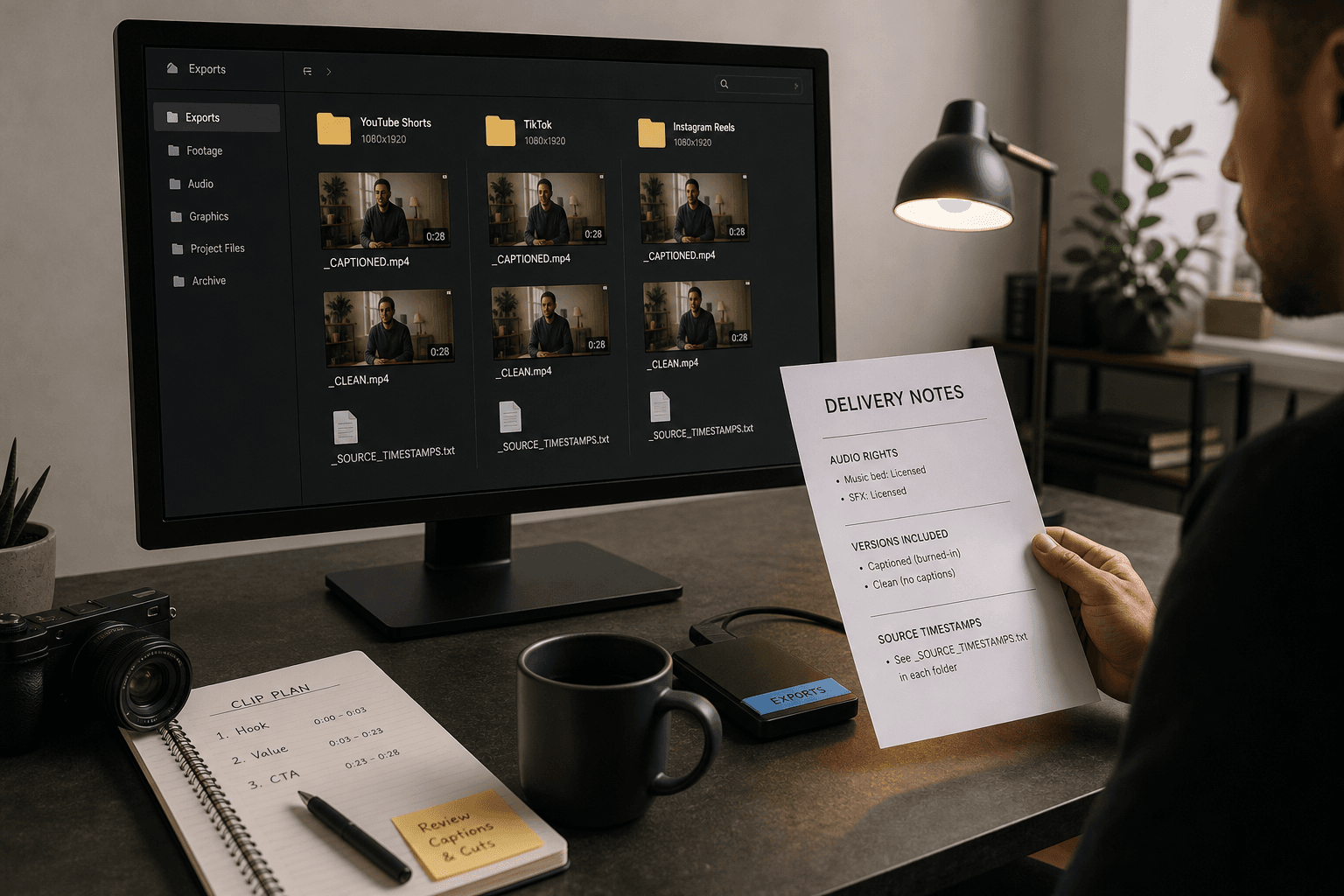
If the returned folder gives you unlabeled MP4s, no note on audio source, no distinction between paid-ready and organic-only versions, and no way to trace each clip back to the source footage, your team still owns the hard part. The service may have saved editing time. It did not reduce much operational load.
Zagged's guide on what belongs in the first clipping brief is worth using before kickoff because it forces three decisions early: who chooses candidate moments, what context must stay, and what files and notes your reviewers need.
Here is what a usable delivery note could look like for the scalp serum example:
Clip 04 — Wash day routine — TikTok / Instagram organic candidate
Source: creator_routine_take2, 03:12-03:38
Viewer question: when to use it without flattening roots
Watch before approval: routine wording, lower-third caption placement, product visible in first two seconds
Audio: replacement track from approved commercial-use library
Exports: captions burned / clean version
And for the hydration founder clip:
Clip 07 — Summer hydration explanation — YouTube Shorts / Instagram Reels
Source: founder_interview_camA, 11:42-12:24
Viewer question: why more fluid does not always solve the problem
Watch before approval: qualifier about everyday hydration remains in cut
Audio: original spoken audio only
Exports: master vertical, caption-burned review copy, clean publish file
That kind of handoff does not win awards for drama. It does let a marketing lead approve work without opening every file three times.
Research changes one part of the recommendation, not all of it
The platform research here is useful, but only if it changes a real production decision.
The clearest finding is about commercial use. TikTok and Instagram do not treat music access for business use casually, and Meta's Reels guidance makes placement formatting a production issue, not a final export issue TikTok Commercial Music Library guidance Instagram music access rules Meta Reels ad guidance. That should change what you ask a clipping provider before hiring: not "Can you make this feel native?" but "How do you handle music, text placement and versioning if we may use some of these clips commercially later?"
The limit of that research is just as important. None of it tells you the ideal clip length for your product, the best opening pattern, or whether one platform-specific variation will outperform another. Those are creative and testing questions, not rules hidden in a help center article. So don't let a provider bluff platform fluency by reciting specs while dodging the actual editorial questions.
One other research-backed question is worth asking now because it tends to appear late and annoy everyone. If a vendor uses AI tools to alter visuals or generate meaningful content changes during clipping, upload and disclosure obligations may still sit with your team. YouTube requires disclosure for realistic AI-generated or meaningfully AI-altered content YouTube disclosure guidance, and Meta says some ads created or significantly edited with its generative AI creative features are labeled in ad disclosures Meta GenAI transparency update. That does not mean auto-captions or simple reframing always trigger a label. It does mean you should ask what the service is actually changing, not just whether it "uses AI in the workflow."
When clipping is the wrong thing to buy
A clipping service is not a rescue service for weak footage.
If the long-form source never shows the product clearly, avoids the real customer question, or relies on broad claims without support, no amount of sharper editing will fix the underlying problem. In that situation, the better buy may be new source footage.
If what you need is fresh creator-led video rather than repurposing, Zagged's human UGC service with real creators and fully edited videos is the relevant separate offer. As of October 21, 2026, the public order flow lists 50-200 fully edited videos at USD $99 each with a 50-video minimum, for a minimum order of USD $4,950 live UGC order configuration. That is Zagged's offer, not an industry average, and you should confirm revisions, raw footage, exclusivity and permissions in writing before treating it as a production plan.
Clipping is also a weak buy when your team already has a strong internal editor, fast approvals and obvious source moments. If the footage is good and the real work is basic versioning, keeping the job in-house may be simpler.
What to ask before you hire
You do not need a giant vendor scorecard. You need a few plain answers that expose whether the provider reduces your workload.
Ask who chooses candidate moments. Ask how they keep a short clip accurate for a cold viewer. Ask what changes when a clip is organic-only versus potentially paid later. Ask what the handoff includes besides video files.
If the answers stay vague and drift back to clip count, templates or turnaround speed, be careful. Fast is fine. But fast plus more review work is not really faster.
If you want outside help specifically with clipping and repurposing, visit Clippin, our clipping business and bring one real source asset, one intended platform mix and one honest answer about whether paid use is likely. That is enough to have a useful conversation this week.
Clipping selection planner
Decide which moments deserve to become separate videos before an editor starts cutting. Complete one copy for each candidate clip.
Watch beyond the proposed in and out points. A strong sentence may rely on context elsewhere in the recording; keep that context or choose another moment.
See a completed example
- Source recording and candidate timecodes
- Example: Product interview, 12:40–14:05. Speaker explains why customers hesitate before their first purchase.
- One question this clip answers
- What should someone measure before ordering this product? Keep the answer narrow enough to stand alone.
- Context that must survive the cut
- Keep the product category and the condition attached to the recommendation. Remove the introduction only if a new viewer can still follow the answer.
- Opening and ending
- Open on the concrete decision, then preserve the explanation that supports it. End once the answer is complete, rather than forcing a cliffhanger.
- Reframing and supporting visuals
- Check whether the speaker and demonstrated object remain visible in a vertical crop. Add an accurate close-up only where it clarifies the explanation.
- Destinations and exports
- Name the intended Shorts, Reels or TikTok placements. Request readable captions and a clean master; verify each platform’s current requirements.
- Context and accuracy review
- Have someone who has not watched the full recording explain the clip’s point. Rework it if they infer a different claim or cannot identify the subject.
Make your own brief
Your entries stay in this tab. Download before leaving; they are not saved or sent to Zagged.
Sources & further reading
- Upload YouTube Shorts - YouTube Helpsupport.google.com
- About the Commercial Music Library - TikTok For Businessads.tiktok.com
- Access to the licensed music library on Instagram - Instagram Help Centerfacebook.com
- Instagram & Facebook Reels ads - Meta for Businessfacebook.com
- About TikTok Advertising Policies for Promote - TikTok For Businessads.tiktok.com
- Disclosing use of GenAI content - YouTube Helpsupport.google.com
- Expanding GenAI Transparency for Meta’s Ads Products - Metaabout.fb.com
- Zagged UGCzagged.com
- Zagged UGC pricingzagged.com
Published by Zagged Editorial. Updated .