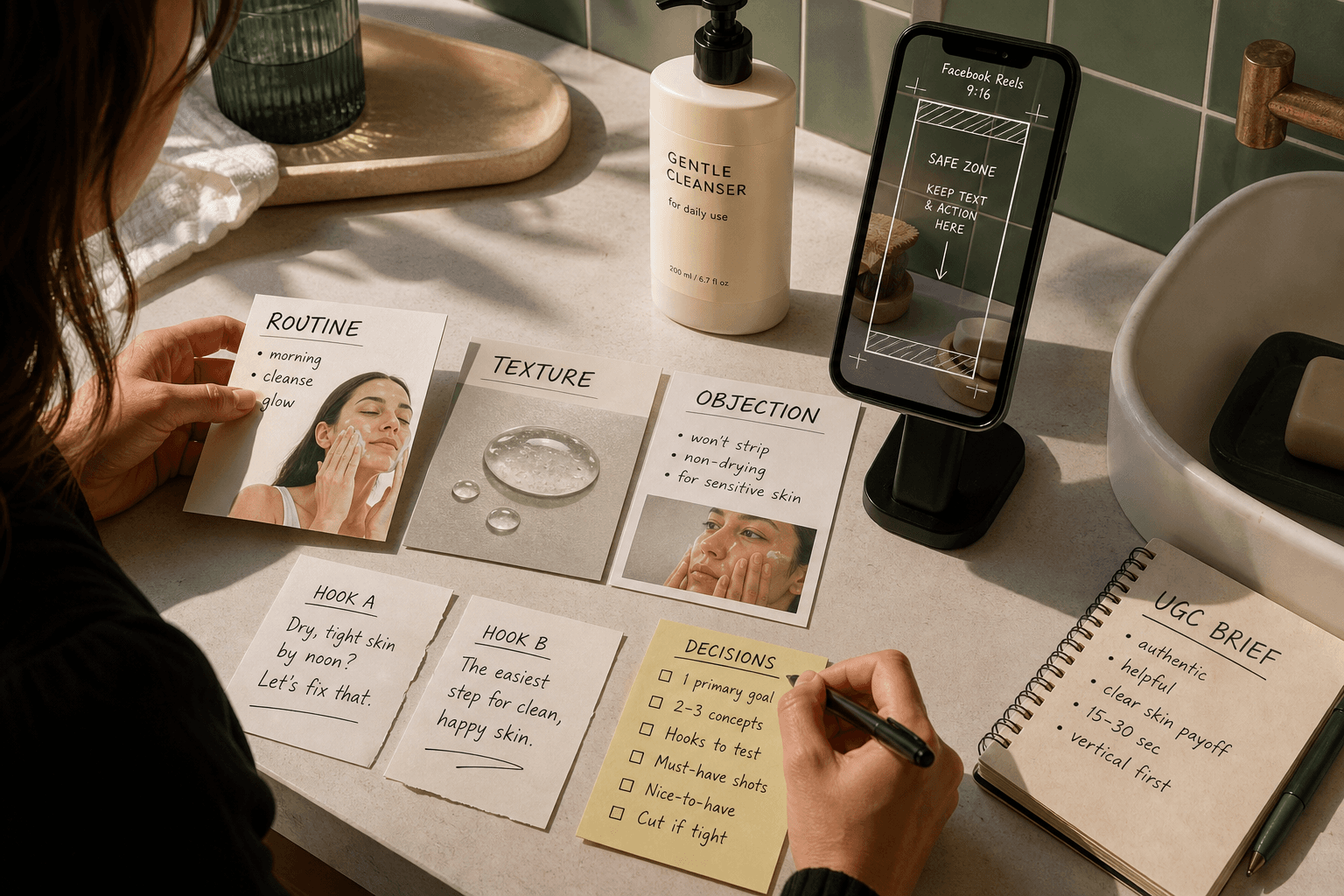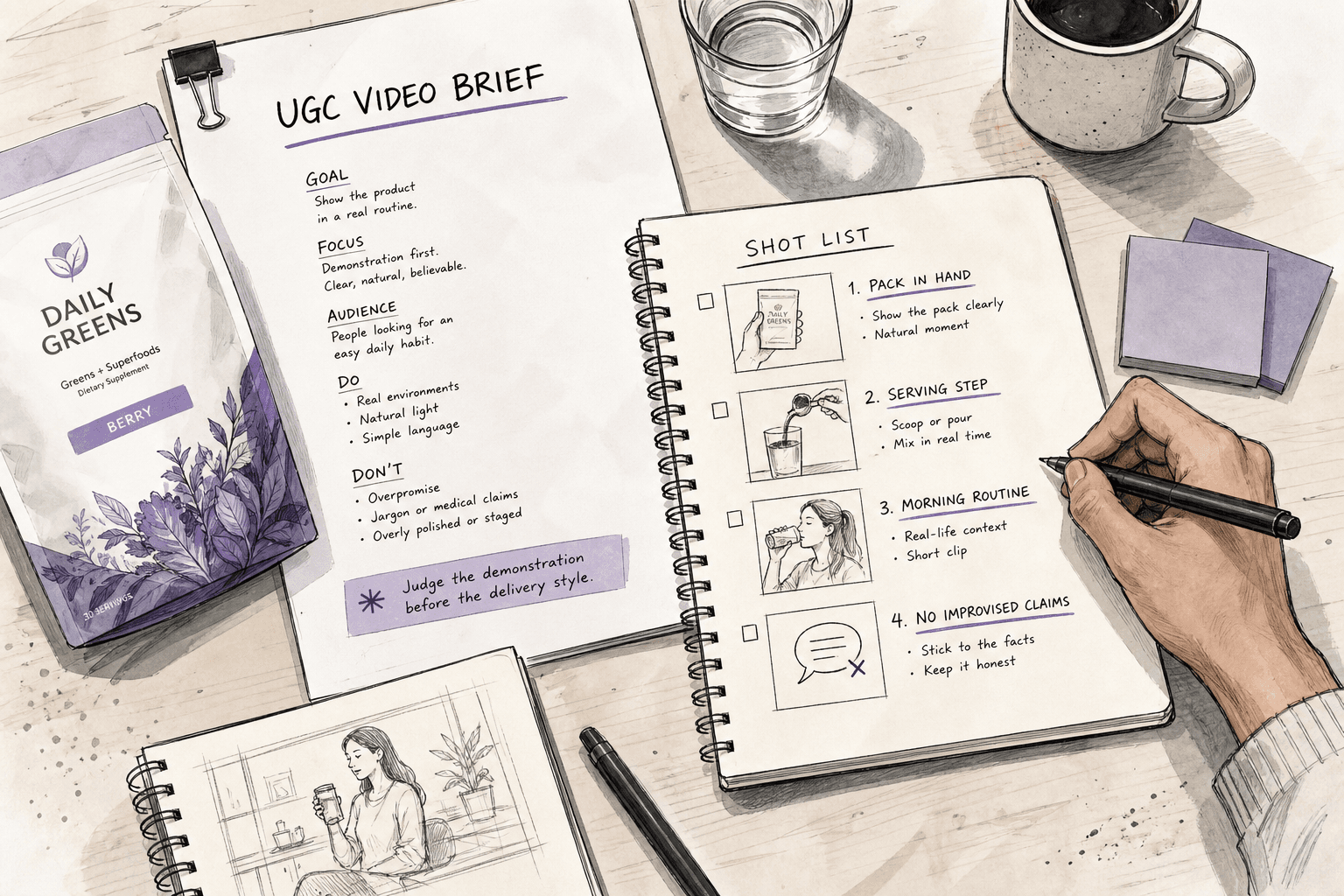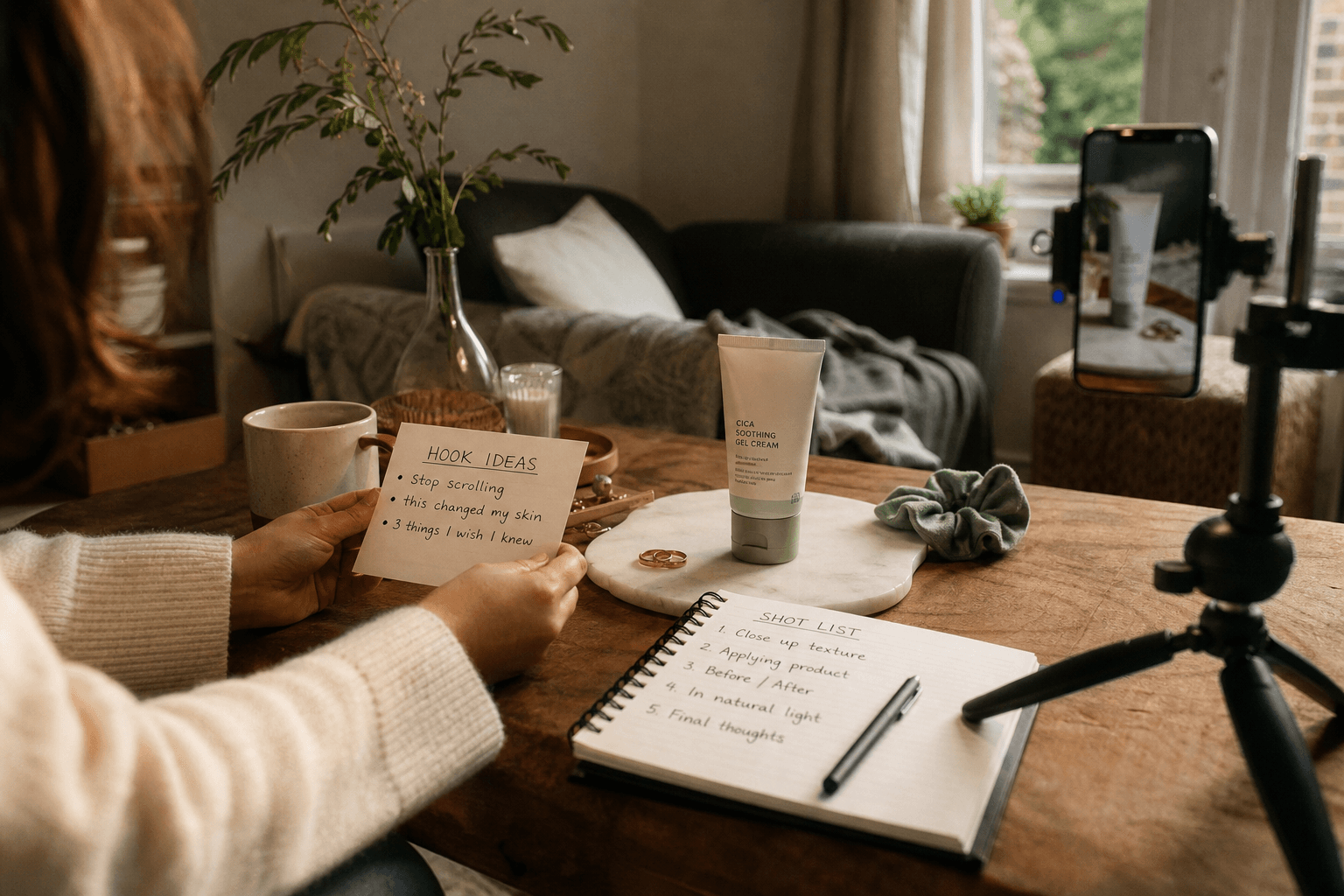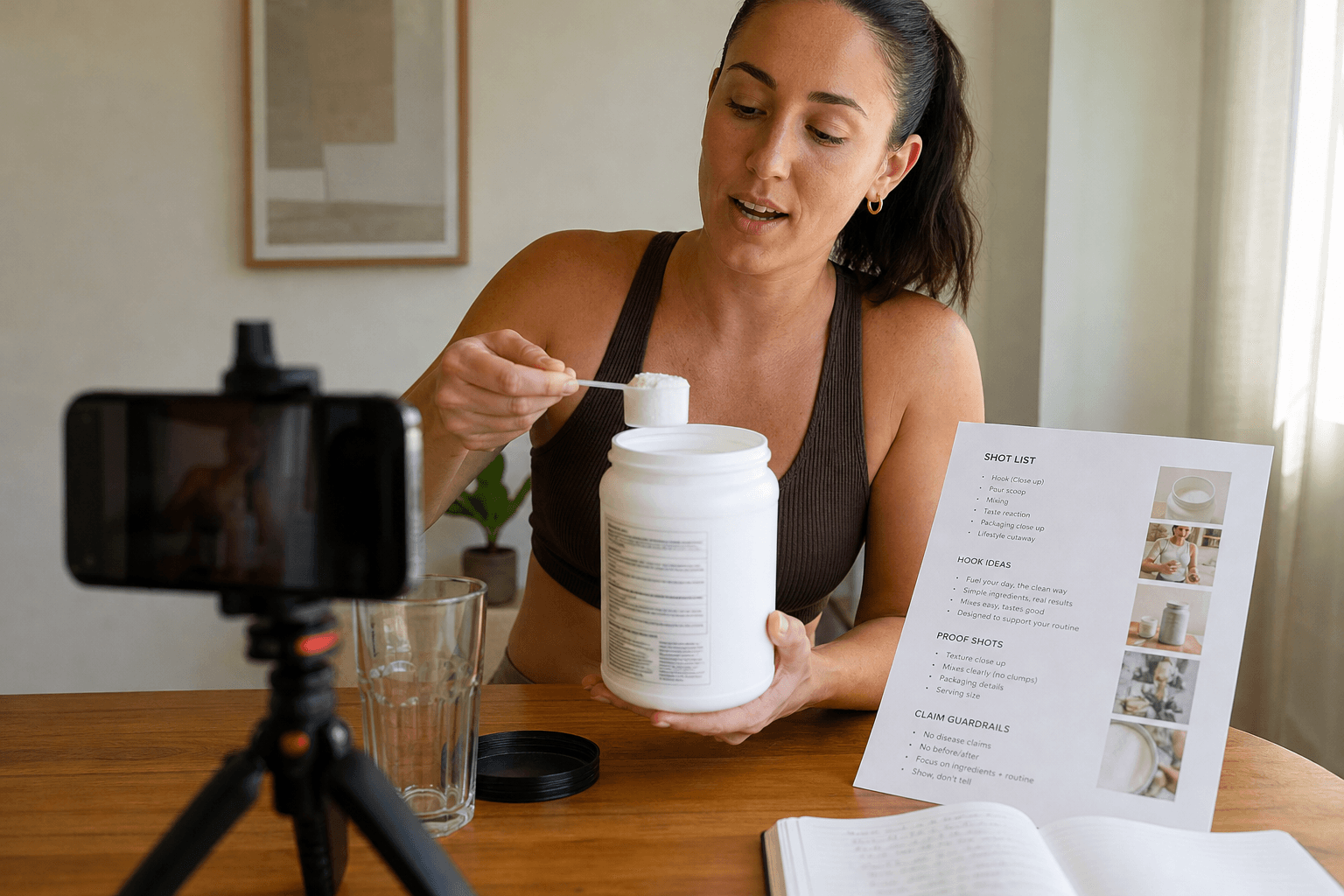
A common mistake goes like this: the team asks for raw footage because it sounds flexible, the files arrive, and then they sit untouched while launch week gets louder.
That is the real issue behind raw UGC vs edited UGC videos. It is not mainly a style debate. It is a handoff problem. Someone has to turn creator footage into assets your team can approve, publish, adapt for paid use, and revisit next week when one hook dies on contact with reality.
My recommendation is simple. If your team is lean and your bottleneck is getting approved content out the door, buy fully edited UGC. If you already have a capable editor and a disciplined testing workflow, ask for raw footage or a hybrid delivery. I would change that recommendation when paid iteration matters more than speed to first publish, or when your compliance process requires your team to control the final wording and on-screen claims.
The useful decision is delivery scope, not “raw versus authentic”
A lot of advice treats raw footage as more native and edited videos as more ad-like. That is tidy, and not especially useful.
The better split is between capture scope and delivery scope.
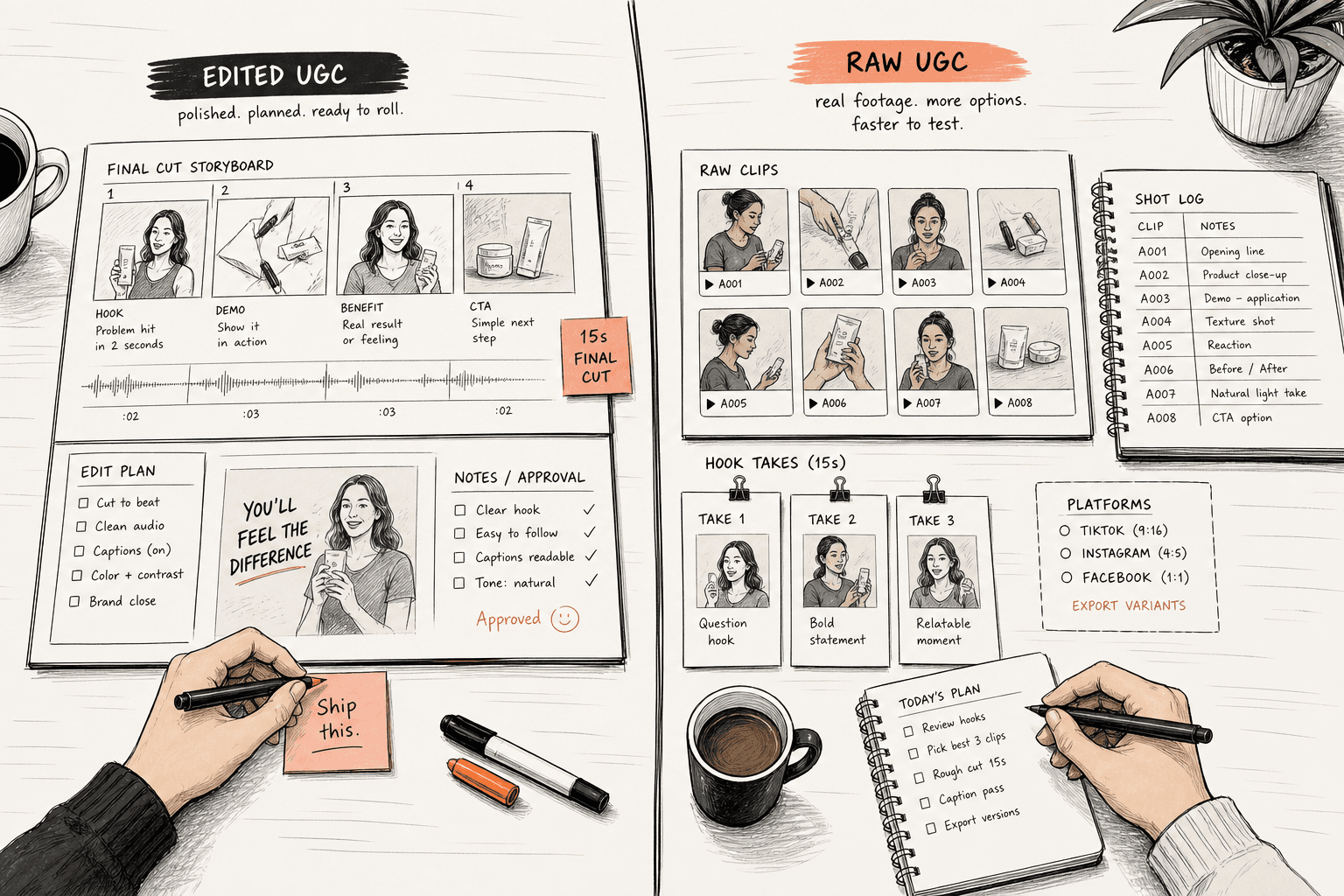
Capture scope is what the creator records: product use, alternate hooks, objection handling, b-roll, closeups, retakes with different pacing. Delivery scope is what your team receives: a finished vertical video with captions, a small batch of ready-to-post cuts, or a folder of footage that still needs an editor, naming rules, and a point of view.
Those are different buying choices. You can want natural creator-shot material and still need a finished file because nobody in-house is going to edit it this week. Or you can want the same natural material but prefer raw delivery because your paid social editor will cut several variants from one shoot.
That distinction matters more once platform workflow enters the room. TikTok says Spark Ads use an existing organic TikTok post and preserve the post’s native interactions, which makes creator-posted content operationally different from building an ad from footage inside your own workflow (TikTok Spark Ads overview). TikTok also requires creators to use its commercial content disclosure tools when promoting a brand, product, or service (TikTok guidance on promoting a brand, product, or service).
That research does not prove raw or edited UGC will perform better. It does tell you the choice affects permissions, posting workflow, and how much work lands back on your team.
Read the video transcript
If you’ve asked for raw creator footage hoping for flexibility, then watched launch week get louder while nothing ships, the problem isn’t style. It’s the handoff. What matters is delivery scope: whether you receive a finished postable video or material that still needs editing, naming, approvals, and someone deciding what happens next. Raw footage can be stronger when a capable editor will test variants. Without that workflow, edited delivery often wins because it removes decisions your team won’t make in time. Picture a daily greens powder. A lean team might need an edited cut showing scoop, texture, mixing, and first sip early, so viewers quickly believe the routine fits. If you already have an editor testing hooks across platforms, raw or hybrid delivery can earn its keep. But permissions, claims, and posting workflow still need settling before filming. Choose the scope your team can actually absorb. The best brief isn’t the most flexible one; it’s the one that turns truthful footage into usable content now.
Start with the handoff your team can absorb
If you want the blunt version, here it is: raw footage is only more valuable if your team will actually use the flexibility.
Fully edited videos remove decisions after the shoot. Raw footage creates them. Sometimes that is exactly what you need. Sometimes it is just a more expensive way to create a backlog.
Here is the comparison that usually settles the argument:
| Delivery option | Product truth | What the brand must provide | Internal workload | Iteration potential | Best fit |
|---|---|---|---|---|---|
| Fully edited UGC | Strong if the brief names the claim and proof clearly | Product, approved claims, placement intent, tone examples | Lower | Moderate | Lean teams that need publish-ready assets |
| Raw UGC footage | Strong if the shot list forces clear demos and alternate takes | Detailed shot list, edit plan, approval owner, naming expectations | Higher | High | Teams with in-house editing and regular paid testing |
| Hybrid: edited cuts plus raw selects | Strong and more flexible if scope is explicit | Same inputs, with the raw selections defined in advance | Medium | High | Teams that need launch speed now and reuse later |
If you have already read generic advice that says “always ask for raw,” compare it against one practical question: who is doing the extra work, and what changes if they find a better opening? If the answer is “nobody, probably,” buy edited delivery instead.
The same logic shows up in Zagged’s guide on scoping UGC by decisions rather than quotas. The useful unit is not “one more video.” It is whether the footage helps your team make a specific creative decision.
Worked example: same product, two different scope decisions
Say you sell a daily greens powder. The product is simple enough to shoot at home, but the buyer still needs to see texture, scoop size, how it mixes, and hear a believable reason to use it. That makes it a good example because the product can support either edited or raw delivery. The team setup changes the recommendation.
When fully edited is the safer buy
Imagine a founder and one marketing manager are trying to launch on TikTok and Instagram this month. Neither edits daily. Both will still need to review claims, approve packaging shots, and get the post live.
In that case, fully edited delivery is usually the better buy.
A usable brief would say:
- Opening angle: “I stopped buying powders that feel like a chore.”
- Proof the viewer needs early: scoop into glass, close shot of powder texture, mixing shot, first sip, tub in frame.
- Claims guardrail: speak to taste, texture, and routine fit; do not promise outcomes or timelines.
- Placement: TikTok, Instagram Reels, and Facebook Reels; usable for organic and paid social.
Useful creator wording might be:
“If the texture is off, I stop using it. This one actually mixes cleanly enough that it fits my morning routine.”
A finished cut should show the powder mixing early, not after a long spoken setup. If mixability is the point, the edit should prove it quickly.
The approval note from the brand side might look like this:
Keep the opening on the scoop entering frame. Cut the pause before “mixes cleanly.” Add captions for “part of my morning routine.” Remove the final line because it sounds like a promised result.
That note is specific, fast, and realistic for a lean team. They are approving an edit, not building one from loose clips.
If you are comparing providers for this kind of scope, read ready-to-post UGC cost and scope before you compare rates. The expensive mistake is not always the higher quote. It is the cheaper quote that quietly hands editing and versioning back to your team.
Zagged’s public human UGC offer is explicitly a fully edited scope: concept and hook, a real creator, editing and captions, a final video file, and paid or organic social usage. As of November 20, 2026, the public checkout lists 50–200 fully edited videos at $99 each, with a 50-video minimum. That is Zagged’s published offer, not an industry benchmark. If raw footage, revisions, exclusivity, creator posting, or account permissions matter, confirm those points in writing.
When raw footage starts to earn its keep
Now keep the same greens product and change only the team.
Imagine the brand has a performance editor who already cuts weekly creative for TikTok, Instagram, and Facebook. The team regularly tests first-three-second hooks, different proof order, and shorter paid cuts. Now raw footage becomes much more attractive, because there is someone ready to turn options into actual variants.
The brief should change with the decision.
Instead of asking mainly for one clean finished video, ask for modular coverage:
- Three alternate hook reads: taste, texture, and routine.
- Two mixing angles: overhead and side view.
- One objection answer: “I don’t like gritty powders.”
- Clean product handling b-roll with no music baked in.
- Extra space before and after each spoken line for easier cutting.
A brand-side decision note might say:
We’re buying raw because we need to test whether “taste,” “routine,” or “texture” should lead in paid placements. We already have editing capacity to build those cuts internally.
That is a good reason to buy raw. “It feels more flexible” is not.
What should the team inspect after launch? Not “performance” in the abstract. Look at first-second hold, whether the mixing shot improves retention when it appears before the spoken setup, and whether Facebook and Instagram need the product action even earlier than the TikTok cut. If the texture closeup consistently holds attention better than the talking-head opening, the next brief should ask for more hands-and-product coverage and fewer long intros.
That is the same discipline behind Zagged’s guide to TikTok hook testing: change one thing you can explain, then let the result change the next brief rather than becoming a grand theory of human behavior.
Paid and organic usage change the sensible scope
If the first job is organic posting this week, edited delivery usually makes more sense. The team can approve the cut, check claims, write the caption, and publish.
If the first job is paid iteration across Meta and TikTok, the value of raw rises because you may want more than one opening, length, or proof order from the same footage pool.
The platform research supports that workflow distinction, not a universal performance verdict. Meta’s business asset systems separate asset permissions and management from the posting workflow, and Instagram media can carry paid partnership information through Meta’s systems (Meta business asset management overview, Meta IG user reference). In plain English: creator-posted content, brand-run ads, permissions, and labeling do not all collapse into one neat checkbox.
So when someone says, “Let’s just have the creator post it and boost it,” stop there and settle the workflow first. If you need creator-originated posts for TikTok Spark Ads, permissions and disclosure belong in the brief before filming starts. If your plan is to run ads from your own accounts and cut several variants internally, raw or hybrid delivery may fit better.
This is also where the Facebook context matters. If the ad has to prove a claim to a cold viewer, delivery style should not distract you from the demonstration itself. Zagged’s guide on buying UGC videos for Facebook ads is worth reading if your team is choosing between “looks native” and “actually shows the product well enough to run.”
Hybrid delivery is often the sensible middle ground
For many teams, the best answer is not raw only or edited only. It is one or two finished cuts plus a defined set of raw takes.
That structure works because it solves two different problems at once. The launch team gets something usable now. The paid team gets enough footage to learn from later.
Imagine you sell a skincare serum that needs visible application, texture, and a simple routine explanation.
A sensible hybrid request might be:
- one 25-second finished edit for TikTok and Reels,
- one 15-second paid cut for Meta placements,
- raw files for three alternate hooks,
- clean application b-roll,
- one objection answer: “I didn’t want another sticky serum.”
Useful creator wording for the finished edit might be:
“I don’t need a ten-step routine. I need something that goes on cleanly and doesn’t feel sticky under sunscreen.”
A brand-side acceptance note could then say:
The 25-second cut is fine for organic. For paid, move the product texture shot ahead of the first sentence and trim the routine setup.
Same footage. Two delivery decisions. One launch file, one testing path.
Hybrid scope is especially useful when your team can edit, but not fast enough to hold up launch. If that sounds familiar, you are not looking for theoretical flexibility. You are buying time.
Research changes one more decision: keep human UGC and AI treatment separate
This article is about human UGC, but one platform issue should change how you write the brief. Meta says it applies broader “AI info” labels when it detects industry-standard AI indicators or when users disclose AI-generated content, and it requires disclosure in some realistic altered-media situations (Meta’s approach to labeling AI-generated content and manipulated media). TikTok’s advertiser guidance likewise says completely AI-generated or significantly AI-modified ads require disclosure (TikTok AI safety guidance for advertisers).
The limit of that research is important. It does not say ordinary editing of human-shot footage turns a UGC ad into AI media. It does mean your team should keep human creator footage, routine editing, and materially AI-generated scenes distinct in scope and approvals. If you are buying human UGC, say so plainly, and do not let later edit requests drift into invented proof of use.
When outside help is worth it, and when it isn’t
Outside UGC production help makes sense when the hard part is getting truthful creator footage and finished edits out the door without creating a coordination mess in-house. It is less necessary when you already have strong creator relationships, plenty of source footage, and an editor who can produce disciplined variations quickly.
If your real bottleneck is not new filming but reworking footage you already own, do not commission another creator shoot out of habit. Use a clipping or repurposing service instead. For clipping inquiries, go to Clippin. If the broader problem is keeping organic short-form production and distribution moving across TikTok, Instagram, Facebook, and YouTube, Zagged’s month-to-month process for ongoing social production and distribution is the relevant place to look.
Choose the scope before you brief the creator
Do not brief a creator with “send us the edited version and raw too if possible.” That usually means nobody decided what the raw is for.
Choose one of these on purpose:
- We need ready-to-post assets because our bottleneck is editing.
- We need modular footage because our bottleneck is paid iteration.
- We need a hybrid scope because launch speed and reuse both matter.
If you need the first option, compare a fully edited scope such as Zagged’s human UGC offer against your actual internal workload, not your aspirations. If you need the second, write the edit plan before the shoot. If you need the third, specify the finished cuts and raw selections in the brief before anyone records a line.
Creator production brief
Turn a product idea into an assignment a creator can quote and film. Replace the example with your own details, then download the brief.
Send this before agreeing scope. Ask the creator to flag any shot they cannot demonstrate accurately. Confirm commercial terms separately; a creative brief does not grant usage rights.
See a completed example
- Product and viewer question
- Example: A compact coffee grinder. Can it fit on a small counter and make a single morning serving?
- What the camera needs to show
- Place the grinder beside a mug for scale. Load one serving, show the controls, and show the cleanup. Do not claim results we have not substantiated.
- Creator and setting
- A creator comfortable explaining a routine in their own words, filming in an ordinary kitchen with clear sound.
- Opening and spoken explanation
- Start with the cramped counter, then show where the grinder fits. Explain one benefit while demonstrating it; avoid reading a list of features.
- Finished files and source footage
- Confirm number and duration of finished videos, aspect ratios, captions, clean exports, alternate openings and whether raw footage is included.
- Claims and required disclosures
- Attach approved product facts. Flag sponsorship or AI disclosures required for the intended use. Do not script personal experience the creator has not had.
- Commercial terms to confirm
- Agree intended channels, paid use, duration, territory, likeness permissions, music clearance, revision scope and who approves publication.
- Review and delivery
- Name one approver. Set dates for concept, first cut and final delivery. Consolidate feedback into one response.
Make your own brief
Your entries stay in this tab. Download before leaving; they are not saved or sent to Zagged.
Sources & further reading
- TikTok Spark Ads overviewads.tiktok.com
- TikTok guidance on promoting a brand, product, or servicesupport.tiktok.com
- Meta business asset management overviewdevelopers.facebook.com
- Meta IG user referencedevelopers.facebook.com
- Meta AI labeling approachabout.fb.com
- TikTok AI safety guidance for advertisersads.tiktok.com
- Zagged human UGC offerzagged.com
- Zagged UGC pricing pagezagged.com
- Clippin video clipping serviceclippin.com
- Zagged ongoing social production and distribution processzagged.com
Published by Zagged Editorial. Updated .