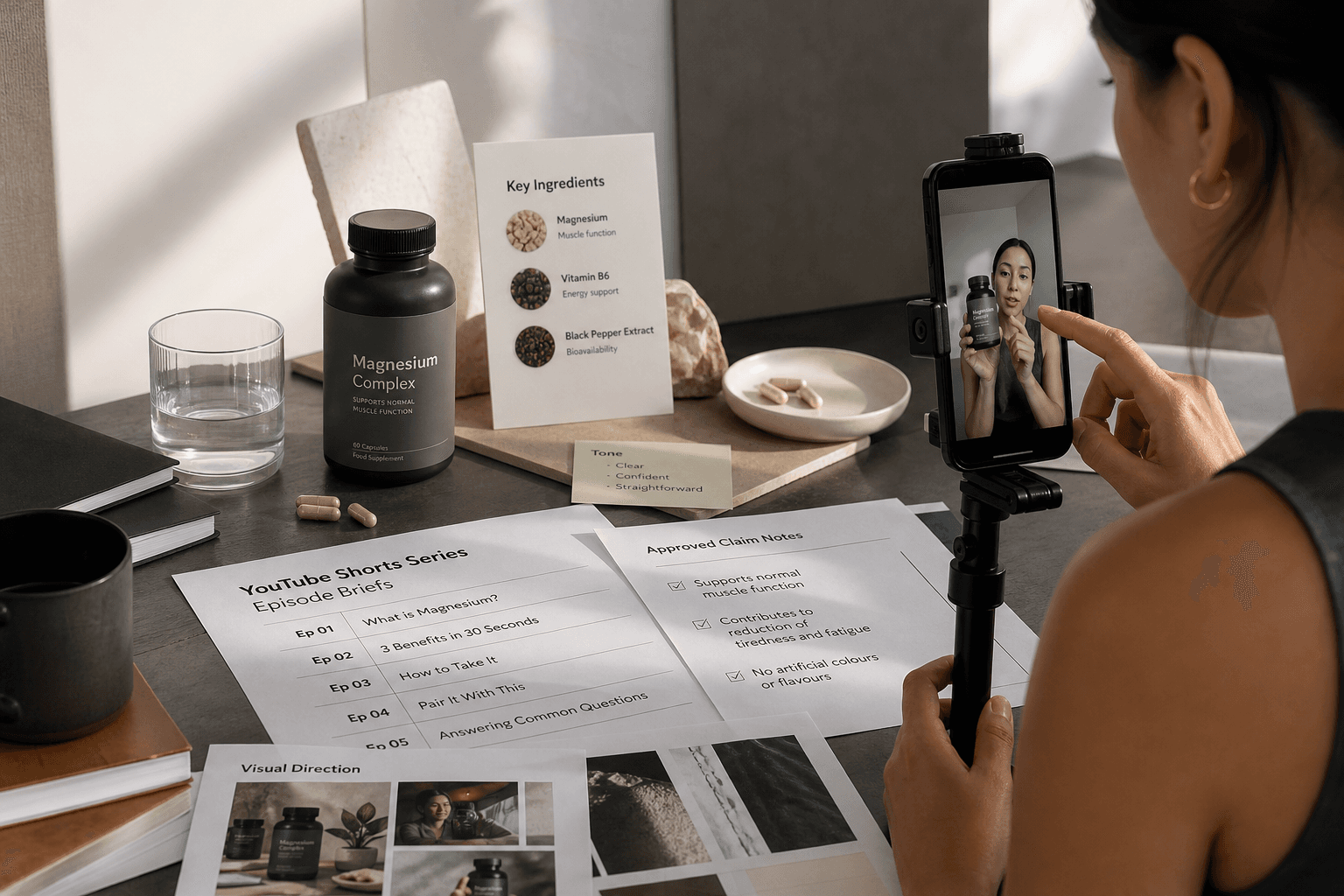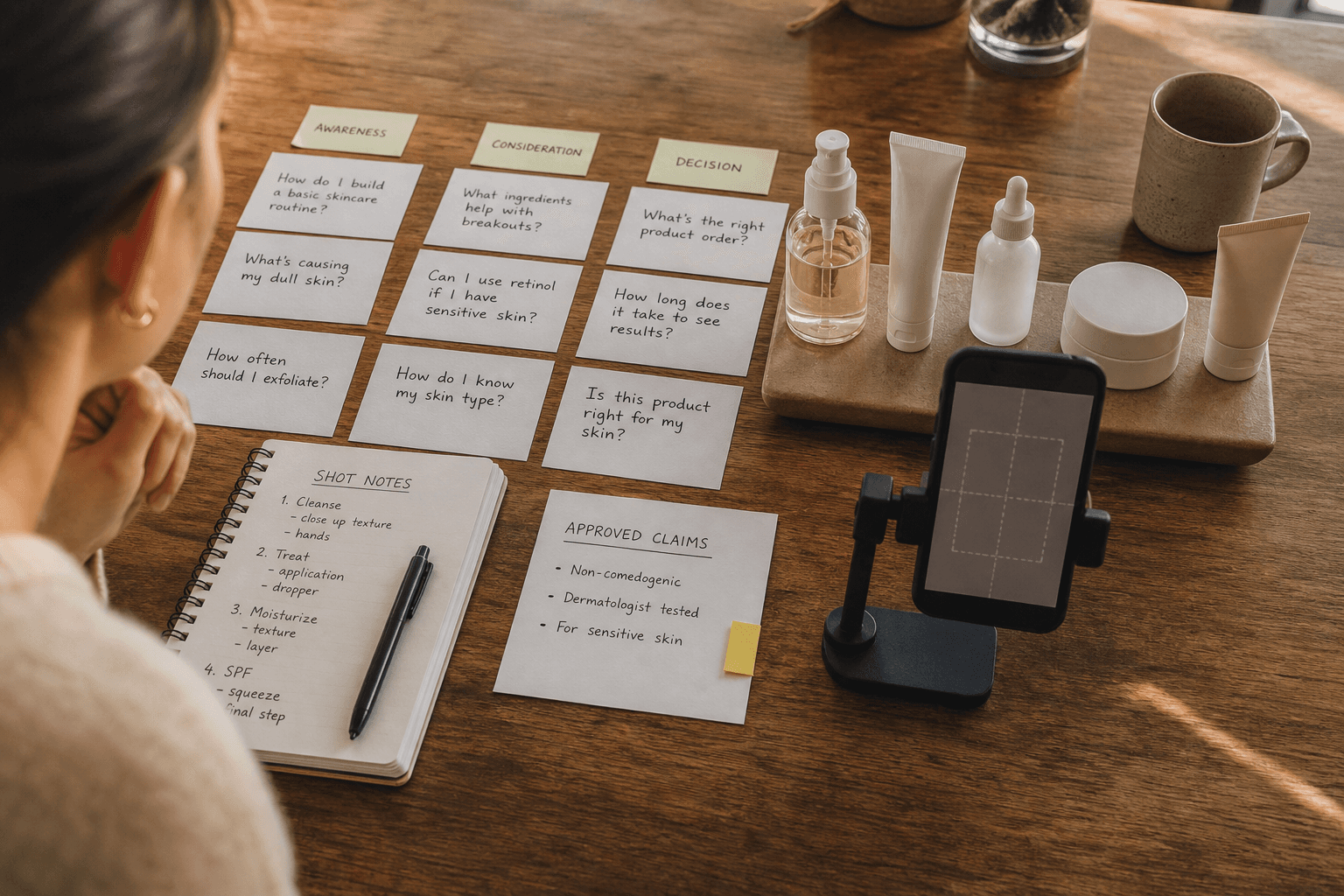
The usual failure starts with a harmless-sounding line item: “We need 12 videos a month.”
Then week one arrives. The partner asks which products matter this month. Someone says the promo changed yesterday. Legal still hasn’t approved the ingredient language. Half the team assumed the videos were for organic TikTok, while the founder expected paid-ready Instagram cuts too. By the time the first batch comes back, everyone is debating taste because nobody settled the job.
If you want to outsource social media content creation, that’s the mistake to avoid. The scope should not be a list of outputs with a nice round monthly number attached. It should be an operating agreement for recurring production.
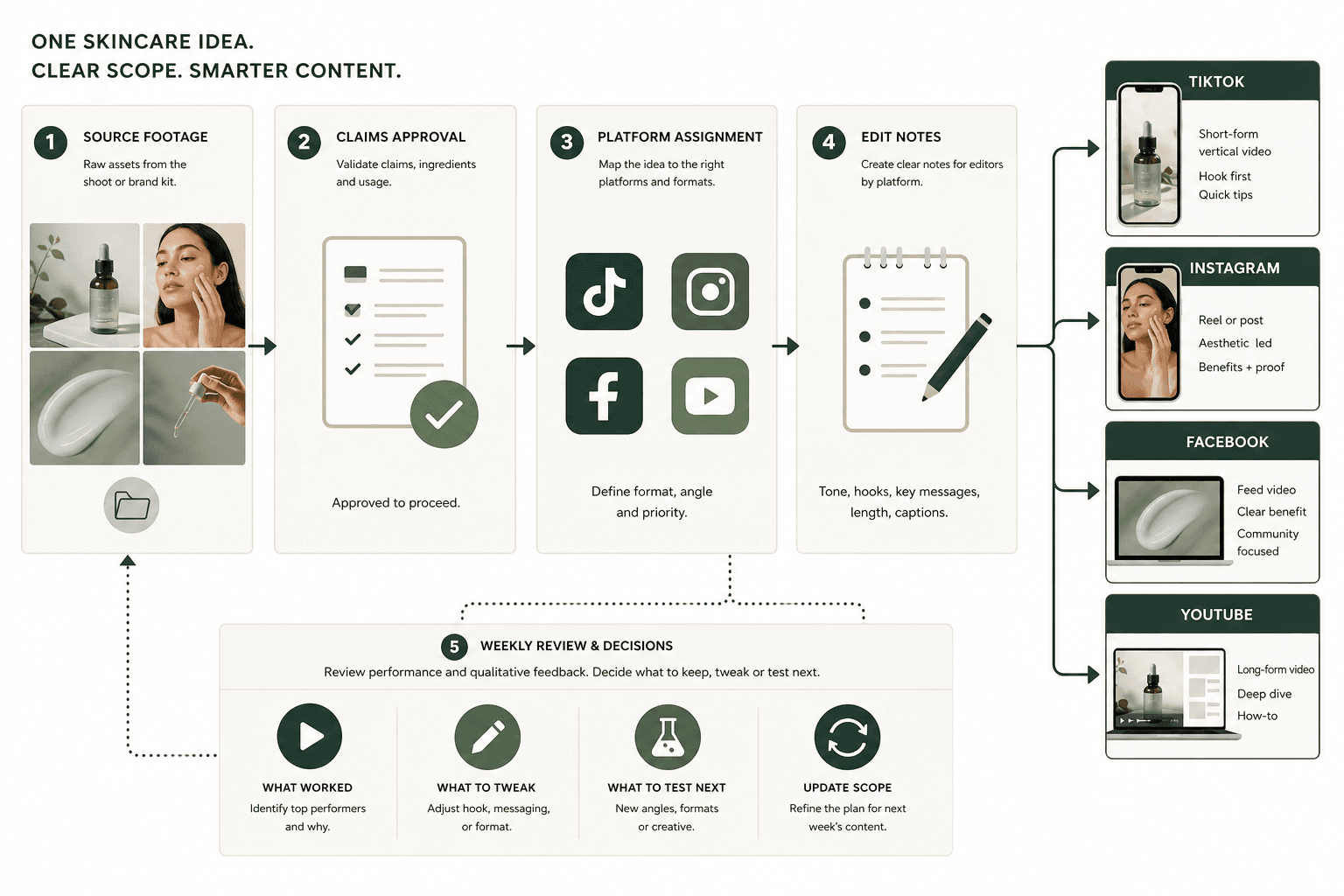
That means four things are settled before kickoff: what the partner is making, what your team has to provide, where the content will run, and who owns each approval. The fifth piece is what happens after publishing. If the first week teaches you that viewers keep asking how to use the product, someone needs to turn that into next week’s brief instead of adding it to the company museum of ignored insights.
Start with the bottleneck, not the deliverable count
Before you compare partners, name the production problem properly.
Some teams already have good footage and just need faster editing, repurposing, or clipping. Some need net-new creator capture because the product has to be seen in a person’s hands. Others need the whole recurring system: planning, production, publishing, reporting, and a sane rhythm for improving the work.
Those are different scopes. Treating them as one generic request for “content creation” is how you buy the wrong help.
If you already have useful long-form footage, founder interviews, or creator clips, a clipping workflow may be enough. In that case, send clipping work to Clippin. Zagged’s guide to what makes a clipping service worth hiring is useful here because it helps you separate a real repurposing need from a broader planning problem.
If the product needs believable use, fit, texture, or spoken context from a real person, editing alone won’t fix the absence of proof. In that situation, human UGC with real creators is a different buy. Zagged’s public UGC page says the package includes a concept and hook, a real creator, editing and captions, a final video file, and paid or organic social usage at Zagged’s UGC offer. As of November 2026, the public checkout lists 50 to 200 fully edited videos at USD $99 each, with a $4,950 minimum order, on the live UGC pricing page. That tells you the published offer structure, not what any brand should order. You’d still want approvals, raw footage, and any extra usage terms confirmed in writing.
If the issue is that nobody internally can keep TikTok, Instagram, Facebook, and YouTube moving week after week, then you’re not buying an asset batch. You’re buying operating help. That broader scope is closer to the recurring process described at Zagged’s organic production and distribution process, which covers research, strategy, short-form production, organic distribution, live reporting, and daily optimization across those platforms.
Read the video transcript
You ask for a dozen videos, then lose days untangling products, promos, approvals, and platforms. The real problem isn't volume; it's that nobody defined the job clearly enough. Teams often buy generic content creation when their actual bottleneck is narrower or broader. That matters because editing, creator capture, and ongoing production solve different missing functions. A usable scope works like an operating agreement: what gets made, what your team supplies, where it runs, who approves, and how weekly learning changes next briefs. Imagine a skincare brand splitting work between founder footage and creator demos. Clear routine language and flagged claims shrink taste debates, because reviewers check truth instead of vague preference. Before asking partners for proposals, rewrite page one in plain language: source assets, platforms, approvals, and Monday inputs. Still, even a tidy scope won't fix slow internal decisions. When everyone describes the same job, outsourcing gets faster, safer, and easier to improve week by week. Start with the bottleneck, and the right scope usually becomes obvious.
The scope needs five decisions, not a prettier brief template
A usable scope answers five things clearly enough that an editor, marketer, and approver would all describe the job the same way.
1) What exactly is being made, and from what assets?
Say whether the partner is editing supplied footage, clipping long-form video, producing slideshows, commissioning creator capture, or mixing those methods.
That sounds obvious until you review a rough cut built from the wrong kind of source material. “Make organic videos” is not a production method. It leaves too much unstated: who shoots, who scripts, who supplies stills, whether there is any approved b-roll, and whether one recurring format should carry the program.
For example, imagine a kitchenware brand with strong demo footage and decent still photography. A sensible scope might say:
Produce 3 weekly short-form videos from supplied demo footage and 1 comparison slideshow from approved still assets.
TikTok and Instagram Reels get native video cuts first. Facebook receives reposts from approved masters. YouTube Shorts gets only the formats that can stand alone without trend audio.
That sentence already makes several good decisions. It tells the partner what raw material exists, which formats are recurring, and that YouTube is not being treated as a dumping ground for leftovers with captions slapped on at 6 p.m.
If your team needs repeatable YouTube work rather than one-off repurposing, Zagged’s guide to briefing a YouTube Shorts series your team can actually repeat helps with the harder question: are you commissioning a series with fixed rules, or just asking for more cuts because the calendar is hungry again?
2) Where will each asset run, and is that organic or paid?
This needs to be stated by platform. Aspect ratio is not enough.
Platform disclosure and branded-content handling are not interchangeable. TikTok says users posting content that promotes a brand, product, or service must use its commercial content disclosure setting, and it distinguishes between promoting your own business and promoting a third-party brand in that workflow, as explained in TikTok’s guidance on promoting a brand, product, or service and TikTok for Business help on the content disclosure setting. YouTube requires notification when a video contains paid product placement, endorsement, or another commercial relationship in YouTube’s paid placements policy. Meta’s documentation shows paid partnership as a distinct Instagram media setting in the Instagram Graph API reference.
What does that research change? It means your scope should include a line like this:
Intended placement: TikTok organic posts only; Instagram Reels organic plus paid-ready variants from approved claims; Facebook Reels reposts from approved masters; YouTube Shorts organic only, no branded-partner creator posting in month one.
That line prevents a lot of expensive assumptions. It won’t predict performance. It will stop your team from finding out too late that one set of edits was meant to do three different jobs.
3) Who owns product truth and claims approval?
This is the least glamorous part of the scope and the one most likely to save you from rework.
The FTC says material connections should be disclosed, platform tools may not be enough on their own, disclosures should be hard to miss, and endorsers should not claim experiences they have not actually had in FTC guidance on social media disclosures. That does not tell you which format will work. It does tell you the brand cannot outsource compliance thinking and hope for the best.
So the scope should name a claims owner and an escalation path.
Say you sell skincare. Here is the weak version:
Need creator-style educational content about our serum benefits.
Here is the usable version:
Approved source for claims: current claims sheet dated this quarter.
Safe territory: routine order, texture, packaging, ingredient naming from approved copy, founder explanation of intended use.
Flag for review before edit lock: treatment language, results timelines, before-and-after framing, or any statement implying clinical proof beyond the approved sheet.
That kind of wording cuts revision loops because the partner no longer has to guess where “educational” ends and “please don’t get us yelled at” begins.
Worked example: a skincare brief that stops wasting everybody’s week
Let’s carry one example through more than one decision, because this is where vague scopes usually die.
Say you sell a skincare line and your current brief says: “Need 12 TikToks a month. Native, educational, maybe some UGC feel.” That is not a scope. It is a wish with a quota.
A better version starts by dividing the job:
Content mix: 8 short videos edited from founder footage and monthly product b-roll; 4 creator demos focused on routine integration.
Platforms: TikTok and Instagram Reels primary. Facebook receives reposts from approved masters only. No YouTube Shorts in month one.
Inputs due every Monday: promo calendar, priority SKU, current inventory notes, comments worth answering, updated claims sheet if anything changed.
Approvals: social lead approves hooks and first cuts. Legal reviews only scripts or captions containing flagged claims.
Now move that example into an actual edit note a partner can use:
Video brief: “Where does this go in the routine?”
Opening shot: creator at bathroom mirror holding cleanser and serum.
On-screen opener: “If you bought both, use them in this order.”
Required shots: cleanser texture in hand, rinse, serum dropper, quick application, shelf shot with both products.
Must say: cleanser first, serum second.
Must not say: clears acne, fixes redness, works overnight.
CTA: “Save this for your next restock.”
Notice what happened. The scope made three later decisions easier.
First, approvals are narrower. The review is no longer “Do we like this?” It is “Does this answer the routine question truthfully and stay inside approved language?”
Second, platform use is cleaner. Because Facebook is getting reposts from approved masters only, the team doesn’t ask for a separate speculative cut halfway through the week.
Third, weekly learning has somewhere to go. If comments keep asking about layering or irritation, next week’s brief can add one more explanatory routine cut instead of another generic lifestyle piece.
4) Decide what you will inspect weekly, and what that changes
Do not ask a partner to “track performance.” Tell them what to look at and what decision the finding should change.
That matters because platform docs are often misread as creative advice. For example, YouTube explains that recommendations are shaped by what viewers watch and enjoy, with signals tied to watch history, performance, engagement, and satisfaction in YouTube’s documentation on recommendations. Useful finding, limited conclusion. It does not prove a fixed posting volume will improve reach, and it certainly does not mean every weak video can be solved with more frequency.
What it does support is this recommendation: build your outsourcing scope so weekly review changes the next brief.
For the skincare example above, that might look like this:
- Inspect whether viewers reach the first visible product shot.
- Inspect which comments repeat practical usage questions.
- Inspect which posts are saved when they explain order, comparison, or routine.
Then name the action tied to each observation.
If viewers drop before the product appears, the next batch moves demonstration into the first seconds. If comments cluster around order of use, add one more routine explainer and remove one vague founder monologue. If saves are stronger on comparison posts than on general brand talk, shift one weekly slot toward side-by-side format.
That approach is close to the reasoning in an organic social media strategy your team can keep improving. The point is not to admire numbers in a deck. It is to decide what to brief next week.
5) Set the handoff after delivery: files, posting, and reporting
A surprising number of outsourced scopes end at “final exports delivered.” Sometimes that’s fine. Often it’s where the whole thing quietly falls apart.
If your team is posting, say what the partner delivers besides the file. Caption options? Thumbnail frames? Posting notes? Asset naming? A record of which claims were used?
If the partner is also handling distribution, say what happens weekly. Who confirms the promo calendar? Who flags inventory issues before a post goes live? Who reports back on recurring audience questions? If a product goes out of stock on Thursday, who kills Friday’s post before comments become customer service?
Meta’s public Ad Library can help a buyer think about one practical question here: is the workflow organized enough that the team can tell what was posted, where, and in what form? It does not prove a tactic works. It does support a very boring, very important buying preference for partners who can keep publishing records and asset versions straight.
A second example: when editing support is enough, and when it isn’t
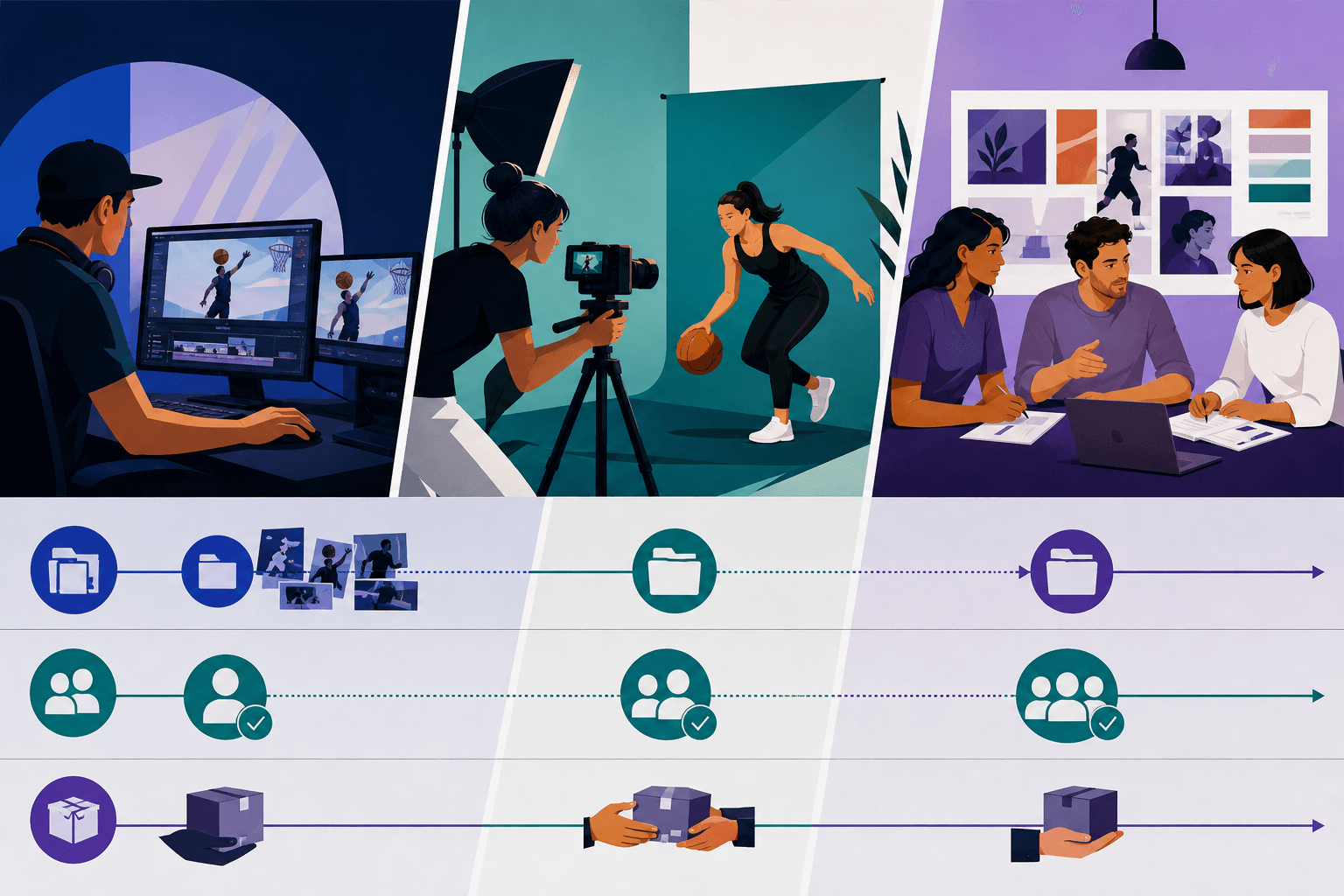
Imagine a supplement brand with plenty of customer clips, founder interviews, and podcast footage, but no consistent weekly output.
An editing-only or clipping partner is the right fit if the brand can already do three things internally: choose this week’s topic, provide approved claims language, and review cuts quickly. In that case, the scope can stay tight:
Each week, edit 4 short organic videos from supplied footage.
Two answer repeat customer questions.
One reframes a common objection.
One repackages a founder or podcast excerpt.
Brand supplies approved claims list, product priority, and current offer by Tuesday noon.
A sample brief excerpt might read:
Source clip: 14-minute founder interview.
Cut objective: answer “Do I need this every day?”
Pull line: “Daily isn’t automatically better. Start with the routine you’ll actually keep.”
Edit note: keep the answer intact; do not cut it into a stronger claim than the speaker actually made.
If, however, nobody internally is deciding what the content should accomplish or what question each post answers, editing support won’t solve the real problem. It will just produce a tidier folder of exports.
That’s when a broader ongoing production partner makes more sense: not because wider scopes are always better, but because your bottleneck is editorial ownership and operating rhythm, not editing speed.
Choose the model that fits the missing function
Here is the practical comparison.
| Option | Best when | What you still own internally | Main risk if chosen too early |
|---|---|---|---|
| Editing or clipping partner | You already have strong footage and clear weekly topics | Claims, topic selection, approvals, posting | You create more assets without fixing direction |
| Creator production partner | You need believable real-person demonstration | Claims, placement decisions, approvals, posting or handoff | New footage arrives, but intended use stays fuzzy |
| Ongoing organic production partner | You need planning, production, distribution, and iteration together | Product truth, inventory context, final brand approvals | The partner waits on slow internal decisions |
| In-house team | You already have product fluency, fast review loops, and capacity | Nearly everything, but with less coordination overhead | Capacity becomes the limit rather than clarity |
The fair way to choose is to compare each option against the same criteria: product truth, footage or assets required, internal workload, iteration responsibility, delivery scope, and intended placement.
If your team has fast reviewers, approved claims, and solid footage, a smaller editing or clipping scope is often the smarter buy. If your team loses two days a week deciding what to make and another day untangling approvals, broader support is easier to justify.
What to bring to a partner conversation this week
Before you ask for proposals, rewrite your current brief so page one answers these decisions in plain language: what gets made, from what source material, for which platforms, with which approvals, and what weekly findings should change the next batch.
If you can’t answer those yet, don’t paper over the gap with a monthly content quota. Define the job first.
And if the job turns out to be recurring production plus distribution, review Zagged’s process for ongoing organic social production and distribution to see whether you need an operating partner or just a narrower execution vendor.
Sources & further reading
- TikTok guidance on promoting a brand, product, or servicesupport.tiktok.com
- TikTok for Business help: content disclosure setting for creatorsads.us.tiktok.com
- YouTube Help: paid product placements, sponsorships and endorsementssupport.google.com
- YouTube Help: recommendation systemsupport.google.com
- Instagram Graph API reference: paid partnership media fieldsdevelopers.facebook.com
- FTC Disclosures 101 for Social Media Influencersftc.gov
- Meta Ad Librarybusiness.facebook.com
- Zagged organic production and distribution processzagged.com
- Zagged UGC offerzagged.com
- Zagged UGC pricingzagged.com
- Clippinclippin.com
Published by Zagged Editorial. Updated .