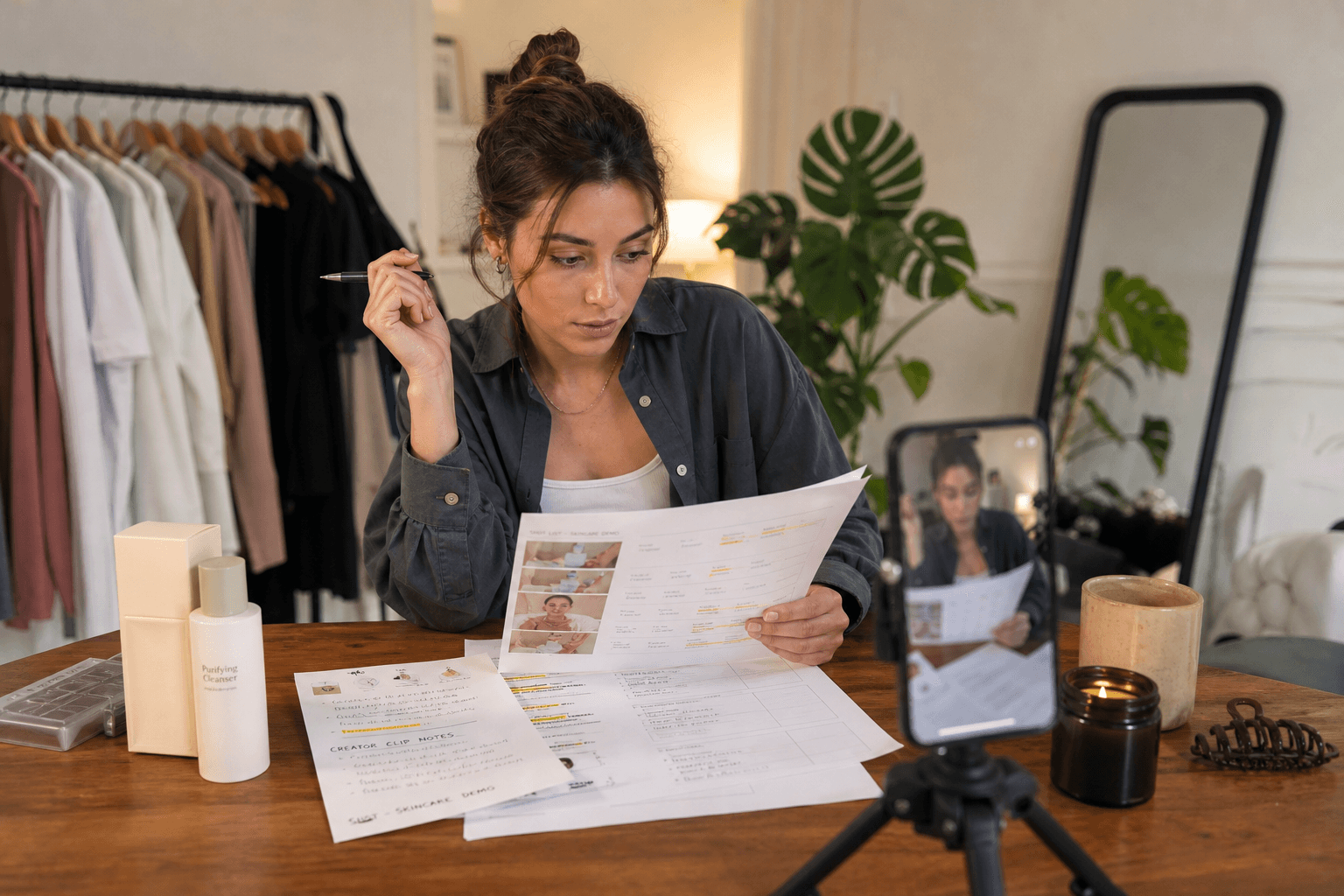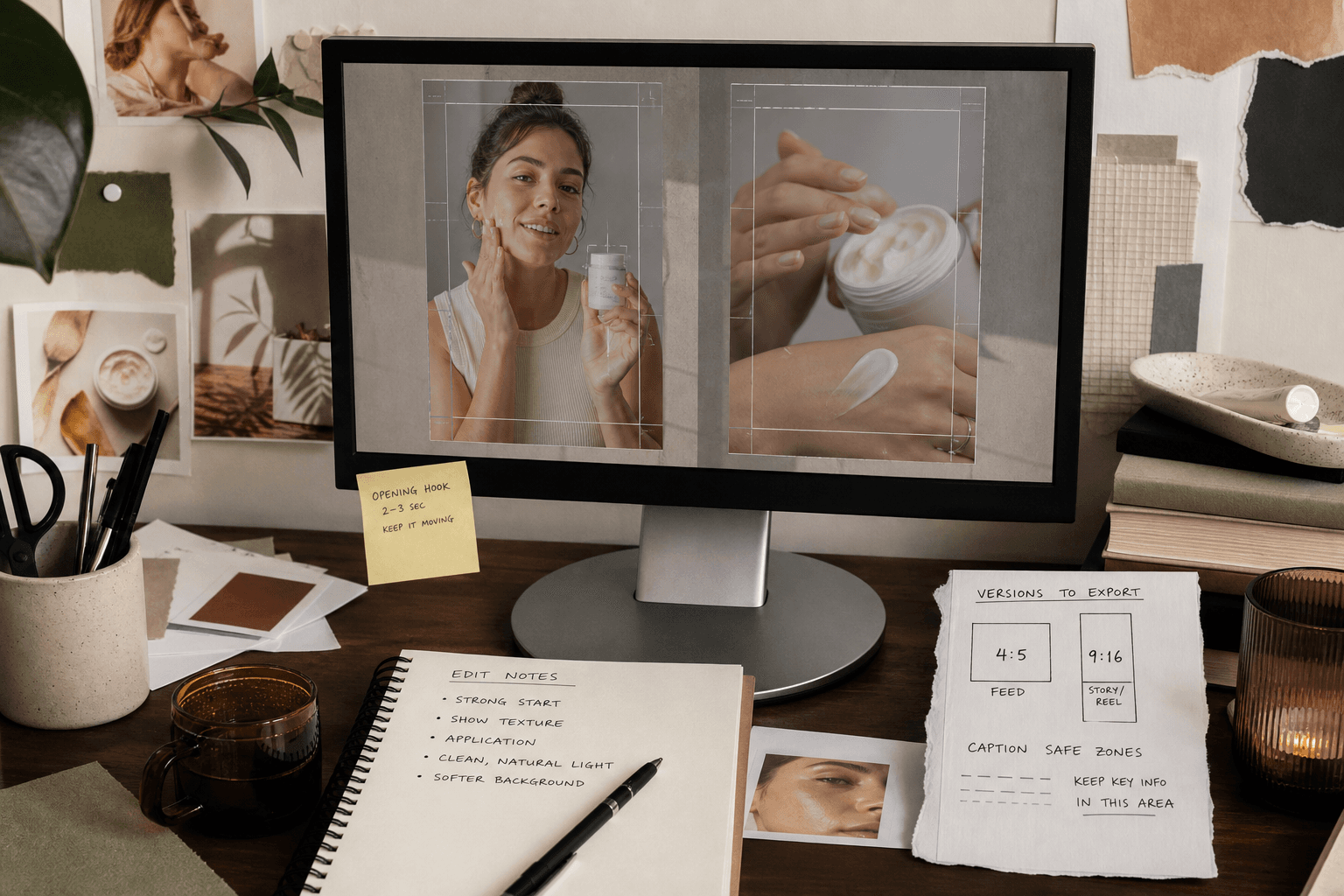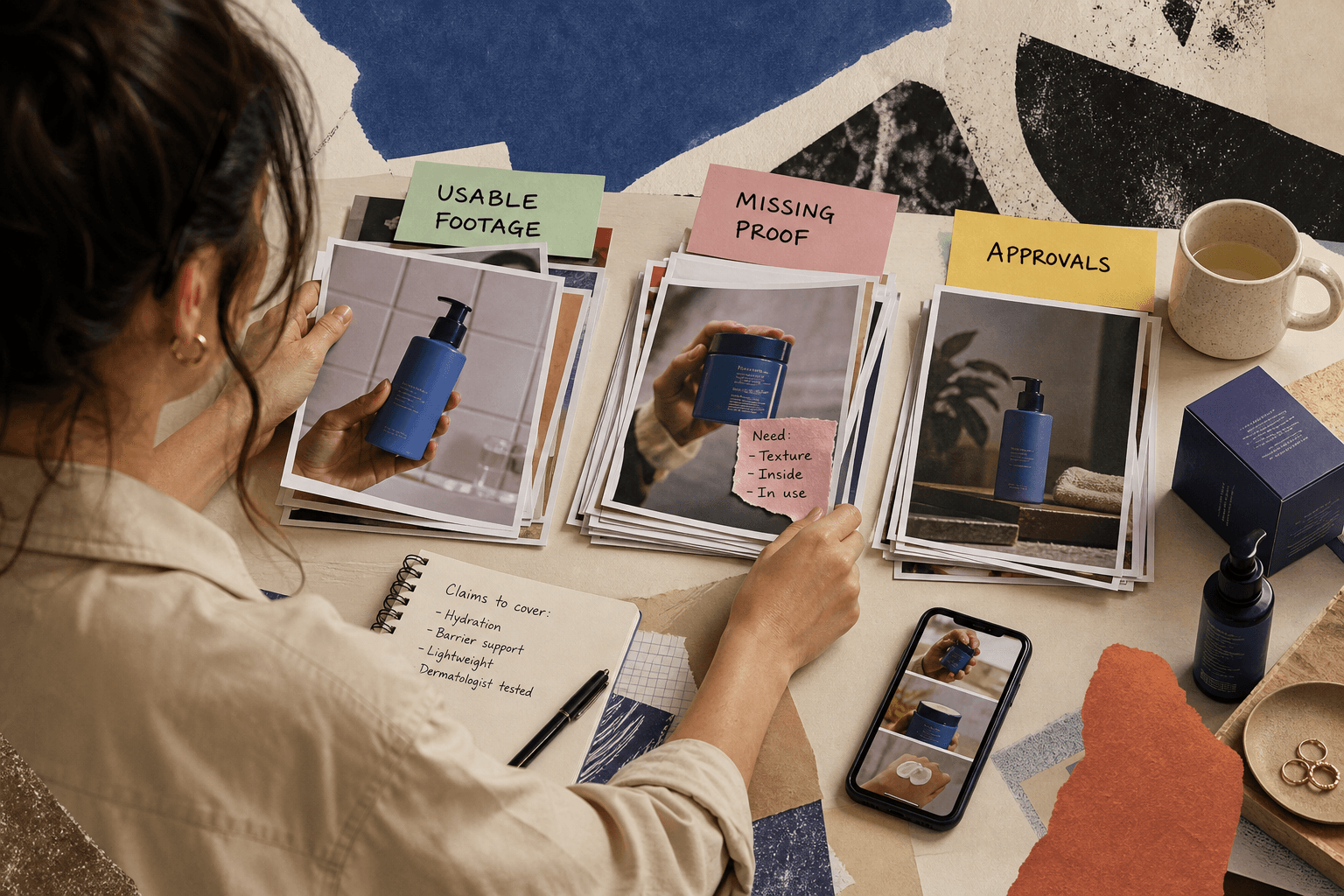
A bad version of this decision looks familiar. Someone asks for “12 variations” by Thursday. The edits come back on time, technically. But half the differences are music swaps, random trims, and new caption styles. Paid launches anyway because the calendar has no mercy. A week later, the team has spend data and very little to say with it.
That is usually not a volume problem. It is a comparison problem.
If you are buying ad creative variations editing for Facebook, Instagram, or TikTok, the useful question is not how many exports you can get from one footage folder. It is whether the batch will help you choose the next brief, the next shoot, or the next round of edits with some confidence. For most ecommerce and consumer brands, the better buy is a set of comparable edits that isolates one meaningful creative variable at a time.
That recommendation is not just tidy strategy talk. Meta’s own testing guidance says to keep all aspects constant except the variable being tested, which is the plain-English rule most teams abandon the minute the request becomes “make them all feel different” (Meta testing guidance on isolating variables). TikTok’s performance creative guidance makes the other half of the case: its best practices are a starting point, not a universal answer, and advertisers should keep testing and learning (TikTok creative best practices). Put those together and the buying decision gets clearer. You want variations that let you learn, not just assets that let you say you tested something.
What should actually vary
A real variation changes a decision you might act on next week. A fake variation changes decoration.
In most paid social batches, the best variables to test are things like the opening angle, the order of proof, the framing of the speaker, the structure of the testimonial, the pace of the first few beats, or the call to action. Those can lead to a different next step. You might decide to shoot more product-demo footage, write stronger ingredient explainer copy, or keep a founder-led format for Meta while dropping it on TikTok.
By contrast, changing subtitle color, swapping tracks, or trimming a few frames can be worth doing when the job is readability or platform fit. But those changes do not usually answer a meaningful creative question on their own.
The brief should therefore start with one sentence the batch is meant to answer.
Not: “Please make 10 different ads from these clips.”
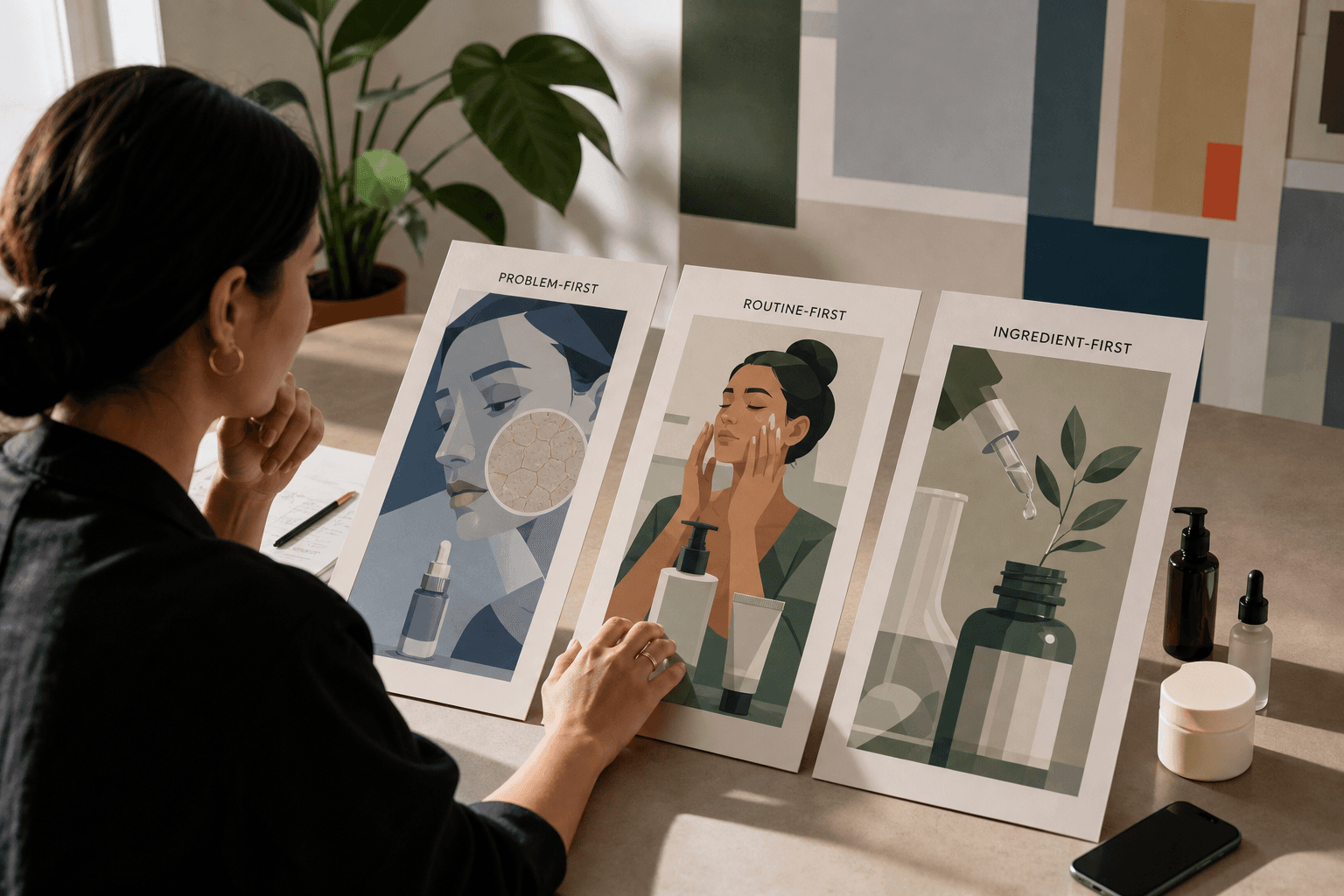
Better: “We need to decide whether this product should open with the problem, the routine, or the ingredient explanation.”
That one sentence does more than keep the editor sane. It gives you a way to review the batch later. If you cannot say what changed between versions, you did not really buy comparable variations.
If your team is still deciding whether editing is the right thing to outsource at all, read Zagged’s guide on when to outsource ad creative editing. It is useful because many “variation” requests are really footage problems wearing an editing hat.
Read the video transcript
You can order a dozen ad versions fast and still learn almost nothing, because tiny tweaks like music or captions rarely explain what to repeat next week. What helps is commissioning edits around one decision, like which opening angle works best, so results can shape the next brief, shoot, or round of cuts. Change one meaningful variable on purpose and hold the rest steady enough to compare, because when four things shift together, the winner doesn't tell you why. The article imagines a skincare brand testing three openings from the same footage: problem-first, routine-first, and ingredient-first, while keeping claims, call to action, and offer consistent. Next, separate message tests from placement adaptations, since a weak result might come from clumsy formatting rather than a weak idea, especially across TikTok and Meta placements. Start your brief with the single question the batch must answer, but remember editing can't rescue weak footage; fewer disciplined comparisons usually beat many near-duplicates.
What should stay constant
A useful test batch changes one thing on purpose and keeps the rest stable enough that the result means something.
In practice, that usually means holding these elements steady across the comparison set: the product truth, the offer, the core footage pool, and the placement group. The exact wording or shot order may shift a little to make each version coherent, but the underlying comparison should stay clean.
Why be this fussy? Because the messiest batches often change four things at once. One cut opens with a creator selfie, another opens with a macro demo, another uses different body copy, and a fourth also changes the CTA and crop. One of them may still win. You just will not know what to repeat with confidence.
This is the same logic behind Zagged’s piece on short-form video editing services: “one edit” is not a comparable unit unless you know what work sits inside it. A variation batch is no different. The structure matters more than the file count.
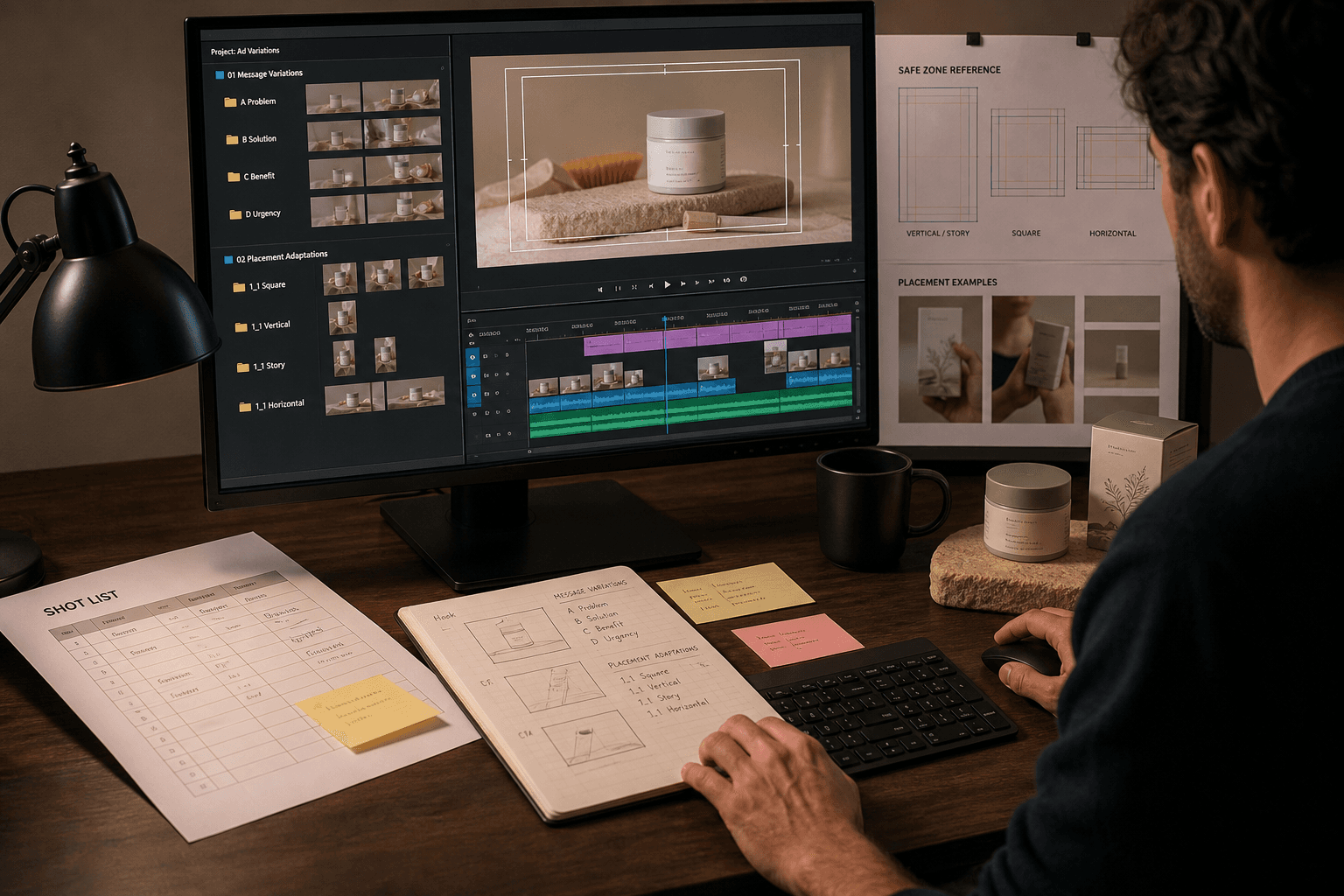
Separate message tests from placement adaptations
This is where a lot of review meetings go sideways.
A message variation changes the idea the viewer meets first. A placement adaptation changes how the same idea fits where it will run.
Those are different jobs, and you should buy them that way.
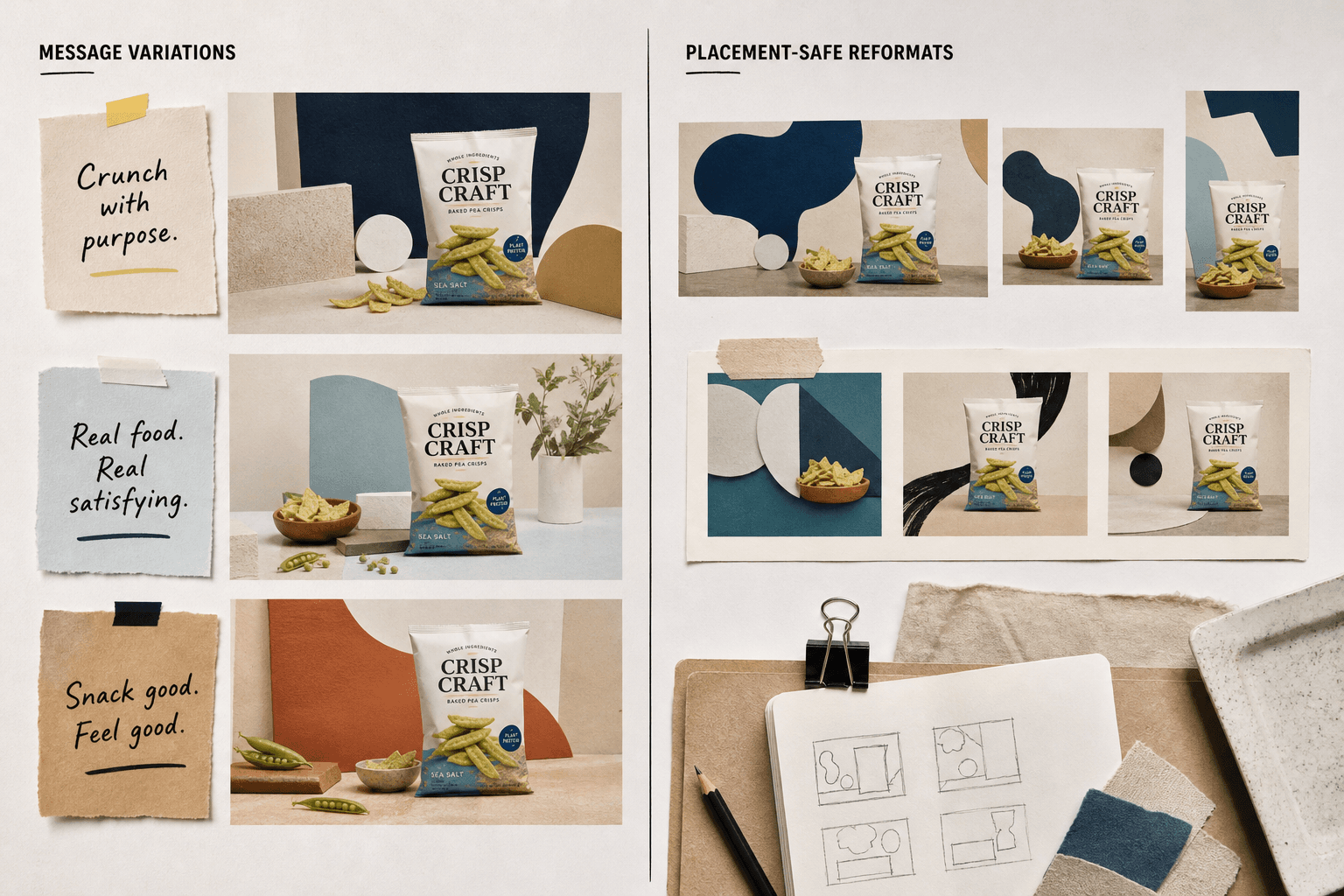
Say you sell a snack product and already have strong footage: pack shots, texture closeups, someone opening the bag at a desk, and a short creator voiceover. You want ads for TikTok, Instagram Reels, and Facebook Stories. The weak request is “make six variations for all placements.” The stronger request separates message choices from formatting work.
For example, imagine this delivery note:
Message set
- Taste-first
- Convenience-first
- Social-proof-first
Placement outputs for each message
- TikTok in-feed cut
- Instagram Reels / Facebook Stories vertical cut
- Feed-safe Meta version if needed for feed inventory
What must stay constant
- Same offer line
- Same footage pool
- Same CTA
- Same proof sequence after the opening beat, unless the test requires a proof-order change
That distinction matters because platform fit is not optional production polish. TikTok recommends vertical 9:16 creative, at least 720p, and attention to safe zones in its performance-ad guidance (TikTok creative best practices). TikTok also sets auction in-feed format constraints, and its ad format policy states ads can run from 5 to 60 seconds in that context (TikTok auction in-feed ad specs, TikTok ad format and functionality policy). Google’s video ad specs make the same broader point for Shorts: vertical 9:16 assets have their own formatting expectations there too (Google Ads video specs for Shorts and other placements).
None of that tells you which message will perform best. It does tell you that “same ad everywhere” is often not a fair comparison. If one version underperforms, you need to know whether the idea was weak or the placement treatment was clumsy.
Worked example: skincare with enough footage, but no clear opening angle
Imagine a skincare brand with eight usable creator clips and one decent application demo. The team’s first instinct is to ask for 15 versions with different text styles, some tighter cuts, and a few audio swaps. That will create files. It probably will not create insight.
A better batch would test the opening angle while keeping the body of the ad largely comparable.
Here is a brief excerpt worth stealing:
Question to answer Which opening angle should we prioritize in the next round of edits and future shoots?
Keep constant Same approved claims, same footage pool, same CTA, same target placement group, same offer language.
Build these three versions
-
Problem-first Opening line: “By mid-afternoon my skin looked flat no matter what I put on first.” First shot: creator close-up before routine. Then: product shown, application, finish.
-
Routine-first Opening line: “This is the step in my morning routine I stopped skipping.” First shot: product in hand at the sink. Then: application, texture, finish.
-
Ingredient-first Opening line: “I wanted niacinamide in something I’d actually keep using.” First shot: product and texture close-up. Then: ingredient mention, application, finish, routine context.
Decision note to editor Do not turn each version into a new concept. We are testing the opening angle and first proof sequence, not rewriting the whole ad.
Now follow that example past the export folder, because this is where teams usually flatten the lesson into nonsense. Suppose the ingredient-first cut gets stronger early hold on TikTok, while the routine-first cut gets better click-through on Instagram Reels. That does not prove a grand rule about skincare audiences. It tells you something narrower and more useful: with this footage set, for this product, ingredient framing may stop the scroll better on TikTok, while routine framing may make the next action feel clearer on Instagram.
That changes the next brief. You might ask for more explainer-style macros and pack-detail shots in the next shoot, while preserving routine-led openings for Meta. That is an actual production decision. “Version 7 spent more” is not.
If your main uncertainty is still the opening itself, Zagged’s guide on TikTok hook testing is worth a look because it keeps the finding precise enough to use, instead of turning one result into a religion.
Worked example: when you mostly need disciplined formatting, not a learning batch
Now take a different case. Say you sell a household organizer. You already know the message that needs to be in market this week: before-and-after, setup in three steps, small-space payoff. The issue is not creative uncertainty. The issue is getting one approved concept into the placements you actually bought.
In that case, your request should be much plainer.
Core message locked Before-and-after opening, three-step setup, same CTA.
Needed outputs
- Vertical cut for TikTok with text kept clear of interface areas
- Story-safe vertical cut for Instagram and Facebook Stories
- Feed-ready Meta version where the setup steps remain readable
Review note Do not crop out the hand action that proves setup speed.
This is a perfectly good editing job. It is just not a message test. The mistake is calling these outputs “creative variations” and later pretending the results taught you which idea won. Sometimes all you need is placement-safe delivery. Say that upfront and save everyone a performative testing narrative.
And if the source material is long-form footage that first needs clipping into candidate moments before ad finishing, route that work to Clippin. Clipping and ad variation editing overlap, but they are not the same scope.
Research changes the advice in one important way
The platform guidance here is useful, but limited. It supports the structure of the recommendation, not any guaranteed outcome.
Meta’s testing guidance supports isolating variables. TikTok’s guidance supports ongoing testing and placement-aware creative. TikTok’s policy pages also make clear that formatting and disclosure rules can affect how a variation is delivered. What none of those sources can tell you is whether a problem-first hook will beat an ingredient-first hook for your product, or whether a faster cut will lower acquisition cost in your account. That is why the batch needs a clean comparison design in the first place.
This matters more, not less, when budget is tight. If spend is limited, do not spread it across a dozen tiny differences. Commission fewer, more distinct comparisons. Three strategic edits usually teach more than twelve near-duplicates that differ in ways nobody can name.
The recommendation also changes when the footage is weak. If the source material does not show product use clearly, lacks believable context, or cannot support the claim honestly, editing will hit a ceiling quickly. In that case, buy better footage before you buy more versions. For brands that need new creator footage rather than more editing from the same assets, Zagged’s human UGC offer explains the scope of that service.
One policy conversation to settle before delivery
If any variation in the batch uses AI-generated or significantly AI-modified content, settle the disclosure and approval process before the files land in your inbox.
TikTok says certain AI-generated or significantly edited content is allowed if disclosed, and it documents an Ads Manager disclaimer setting for AI-generated, synthetic, or manipulated media (TikTok misleading and false content policy, TikTok Ads Manager disclaimer settings). That does not automatically transfer to Meta in the same exact form, so do not assume one platform’s workflow covers another’s. The practical takeaway is simpler: if your variation depends on synthetic scenes or heavy manipulation, someone needs to own the review and labeling decision during briefing, not five minutes before launch.
Also keep the claim honest. AI can help with backgrounds, layout changes, and some variation work. It is a poor substitute for real proof when the ad depends on texture, fit, use, or personal experience.
What to send before editing starts
A strong brief for ad creative variations editing is usually short. It just needs to make the comparison legible.
Send:
- the one question this batch must answer
- the single variable allowed to change, or the small set of planned variables if they are split into separate groups
- what must stay constant
- approved claims and prohibited claims
- the source footage list or folder map
- the placements required for each version
- the file naming logic tied to the test structure
A usable note might read like this:
“Please build six paid-social edits from the approved creator clips. We are testing opening angle only. Keep offer, body structure, CTA, and footage pool as consistent as possible. Deliver three message variants, each with a TikTok cut and a Meta vertical cut for Reels/Stories. Label files by angle first, then placement.”
That gives the editor a job that can be executed and gives your internal team a review frame that is not just mood-based.
Approve the work by decision, not by taste
Before launch, inspect the batch in three passes.
First, can you describe the difference between versions in one sentence each? If not, the comparison is too muddy.
Second, does every cut still tell the product truth? Editing often removes the exact shot that made a claim believable.
Third, are the placement adaptations actually readable where they will run? On TikTok especially, safe-zone awareness is not decorative. If the key line or CTA sits under interface elements, you did not receive a usable adaptation (TikTok creative best practices).
Keep paid and organic use separate in this review. A creator-style ad in your ad account is not the same thing as branded content posted on a creator’s own channel. On YouTube, for example, paid-promotion disclosure applies when creators feature branded content on their channels (YouTube paid promotion disclosure requirements). Different workflow, different approvals, different responsibilities.
If you already have truthful footage and a clear question to answer, outside editing help can make sense when the hard part is turning one source set into structured, placement-ready comparisons. If that is the scope you need, Zagged’s ad editing and ongoing short-form production process shows the kind of work to discuss before you commission it.
The next move is simple. Write the sentence your batch needs to answer. Then buy the edits that answer that sentence, not the ones that merely increase the export count.
Ad creative editing handoff
Give an editor the material and decision behind a revision. Use this to separate a new hook test from a full creative rebuild.
Attach the actual source files and reference timecodes. If a claim needs new evidence or a missing shot, ask for it before editing around the gap.
See a completed example
- What this edit should help us learn
- Example: Does showing the product in use before the explanation make the opening easier to understand? This is a hypothesis, not a promised lift.
- Source files and selections
- Link the original footage, product shots, approved logo, captions and project files. Identify the exact takes or timecodes worth keeping.
- What stays consistent
- Keep the offer, body explanation and closing request consistent when comparing the opening. List any unavoidable differences.
- What changes in each version
- Version A opens on the product demonstration. Version B opens on the problem. Specify the visual and spoken change for each.
- Placement and export requirements
- List TikTok, Reels, Facebook or Shorts placements. Verify current aspect ratio, duration, safe-area and caption requirements for those placements.
- Claims, music and permissions
- Provide approved claims and cleared music. Identify footage with limited usage rights. Do not create an unsupported before-and-after result.
- Approval and file naming
- One approver; timestamped notes; a named revision round. Use product_opening-version_placement_date in filenames so the test can be traced.
Make your own brief
Your entries stay in this tab. Download before leaving; they are not saved or sent to Zagged.
Sources & further reading
- TikTok creative best practices for performance adsads.tiktok.com
- Meta Audience Network testing guidancefacebook.com
- TikTok auction in-feed adsads.tiktok.com
- TikTok ad format and functionality policyads.tiktok.com
- TikTok misleading and false content policyads.tiktok.com
- TikTok ad disclaimers in Ads Managerads.tiktok.com
- Google Ads video ad specs and format requirementssupport.google.com
- YouTube paid promotion disclosure labelssupport.google.com
- Zagged ad editing and short-form production processzagged.com
- Zagged human UGC offerzagged.com
- Clippinclippin.com
Published by Zagged Editorial. Updated .